
World Cricket
South Australia Hit Back, the 422 Chase Is No Longer Just a Dream
शेफील्ड शील्ड तीसरे राउंड में एडिलेड ओवल पर दक्षिण ऑस्ट्रेलिया को चौथे दिन 96 ओवर में 240 रन चाहिए, यानी 2.50 रन प्रति ओवर, जबकि उसके नौ विकेट शेष हैं। वेस्टर्न ऑस्ट्रेलिया ने पहली पारी में पांच विकेट पर 406 रन बनाकर पारी घोषित की, दक्षिण ऑस्ट्रेलिया 154 पर ढेर हुआ, और मेहमान टीम की दूसरी पारी 169 रन पर खत्म होने से 422 का लक्ष्य बना। तीसरे दिन के अंत तक मैकेंज़ी हैवी 90 और कप्तान नाथन मैकस्वीनी 57 रन पर नाबाद थे। इस मैच का सबसे बड़ा सामरिक मोड़ यह रहा कि 252 रन की बढ़त के बावजूद वेस्टर्न ऑस्ट्रेलिया ने 150 रन की सीमा से ऊपर होने के बावजूद फॉलो-ऑन लागू नहीं किया। शेफील्ड शील्ड में सबसे बड़ा सफल पीछा 506 रन का है, जो 1991-92 में दक्षिण ऑस्ट्रेलिया ने ही किया था, इसलिए 422 का लक्ष्य उससे 84 रन कम है। चौथे दिन सिर्फ़ हल्की बारिश का पूर्वानुमान है, इसलिए परिणाम की संभावना ड्रॉ से अधिक है। यह प्रथम श्रेणी क्रिकेट है, टेस्ट नहीं, इसलिए इस फ़ॉर्म को टेस्ट स्तर पर नहीं फैलाया जाना चाहिए।
The Sheffield Shield third-round match at Adelaide Oval has reached a point where South Australia are no longer merely hoping for a draw — they are genuinely positioned to push for a win. At stumps on day three, the hosts had moved to 182 for one in their second innings, needing 240 more runs with nine wickets in hand. Western Australia had declared their first innings at 406 for five, South Australia were bowled out for 154, and the visitors added 169 in their second innings, setting a target of 422.
The match has broken into three distinct phases. On day one, Western Australia dominated with 257 for one. Day two flipped the script entirely, with 18 wickets falling in a chaotic passage in which the bowlers held complete control. On day three, the surface settled again and South Australia responded with 182 for one. A single pitch behaving in three different ways means day four will hinge almost entirely on how the new ball, the old ball and the variable bounce interact.
The maths are the central point. South Australia need 240 from a maximum of 96 overs — a required rate of just 2.50 runs per over. Their current innings has been progressing at roughly three runs per over, with Mackenzie Harvey on 90 off 132 balls and captain Nathan McSweeney on 57 off 132. Scoring speed is not the constraint. The binding constraint is preserving wickets across roughly 80 overs. At 2.5 an over, South Australia win with time to spare. At around 2.2 an over, the overs run out and the match is drawn. The margin between the two outcomes is very thin.
The tactical hinge of the match is Western Australia's decision not to enforce the follow-on. They led by 252 on the first innings — 406 against 154 — comfortably above the 150-run threshold that applies in three- and four-day cricket. Instead of asking South Australia to bat again under pressure, they batted themselves and were bowled out for 169. That converted a scenario in which South Australia had to survive into one in which they can win. The logic behind the call is understandable — a tiring attack, a day-three pitch still offering something, and bonus-point calculations — but the consequence is that Western Australia must now take ten wickets across 96 overs to force a result.
The forecast for Saturday is for light rain only. Intermittent light rain rarely kills a match outright, and the report itself concludes a result is the likely outcome. That leaves two realistic paths: South Australia completing the chase, or Western Australia breaking through in the final 40 to 50 overs.
The "improbable chase" framing, however, is partly a stretch. South Australia's target of 422 sits 84 runs below the all-time Sheffield Shield record chase of 506 — a record that South Australia themselves set in 2026-92. The report supplies its own counter-evidence to its headline. This is a hard chase, but it is not a fantasy.
One data caveat deserves mention. The claim that 18 wickets fell on day two cannot be exactly reconciled with the scoreline sequence: Western Australia were 257 for one late on day one, declared at 406 for five, South Australia made 154, and Western Australia were 79 for six at the start of day three. That implies somewhere between 18 and 20 wickets depending on how many fell in the closing overs of day one. The discrepancy is minor and may simply be an approximation, but the exact figure should be verified.
Format context matters here. The Sheffield Shield is first-class cricket but it is not Test cricket. Matches are scheduled over four days at 96 overs per day, bonus points apply in the first 100 overs of each first innings, and squad depth is thinner than at international level. A single innings from Harvey or McSweeney cannot be read as evidence of Test-level form.
Around the two central figures sit Jhye Richardson, Ashton Agar, Cameron Bancroft, Jayden Goodwin and Brendan Doggett, all of whom could shape day four. The decisive question is whether the senior bowlers can extract anything from an older ball — reverse swing or a hint of uneven bounce. If one or two wickets fall in the first session, the pressure swings immediately, because South Australia would then need to score faster than 2.5 an over, which brings risk into the equation.
Home advantage is also real: Adelaide Oval is South Australia's own ground, and their day-three control reflects that. Notably, the 506-run record chase of 2026-92 was not played at this venue — a piece of historical colour rather than a direct parallel.
Two scenarios dominate day four. In the first, South Australia build partnerships from the start, keep the rate above 2.5 and close in during the afternoon. In the second, Western Australia take two or three early wickets, the batters go defensive, the rate drops towards 2.2 and the overs begin to run out. In the second, a draw becomes the most likely result, since light rain will not intervene decisively. McSweeney's judgement — he has already shown his intent with 57 off 132 balls — will decide when the innings shifts from survival to pursuit.
Regardless of the outcome, Western Australia's choice to leave the game open despite a 252-run lead will be debated in a competition where bonus points and squad depth shape tactical calls. South Australia need 240 in 96 overs; they lack time nowhere near as much as they lack wickets. If a partnership of the Harvey-McSweeney kind forms once more, this becomes one of the domestic game's memorable chases. If wickets fall in the first hour, it becomes another near-miss. For now the advantage sits with the hosts, but by a margin thin enough that a single session can reverse it.
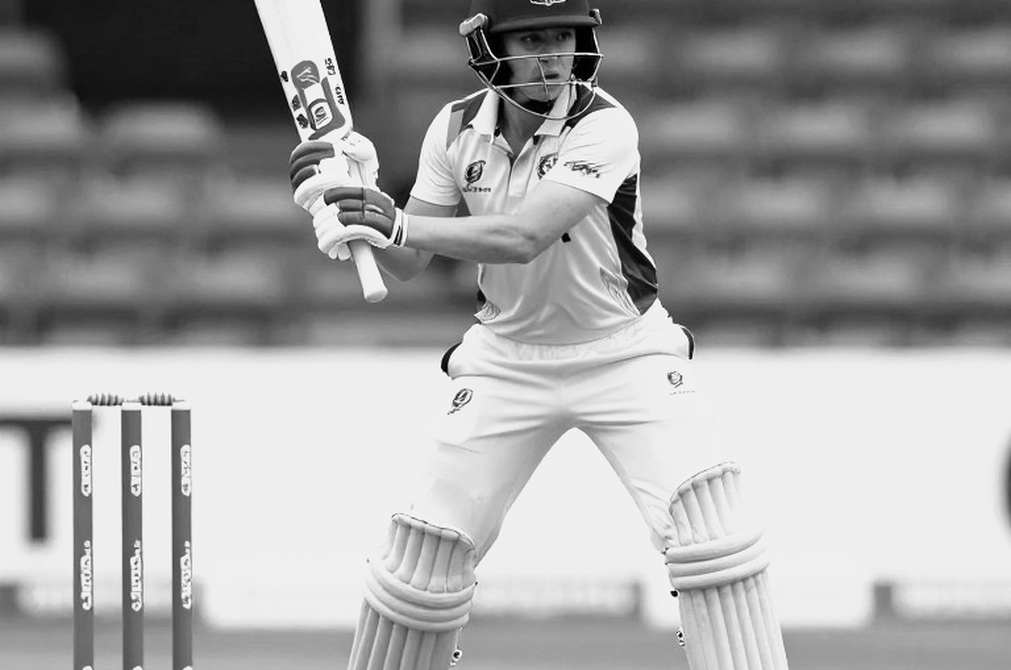
संबंधित खिलाड़ी
अनुशंसित
Newlands, Day One: Cummins' Short-Ball Plan, Markram's Back Foot and the Story of a Half-Chance2026-10-28
Darcie Brown Out of WBBL 2026: Just an Injury or a Crisis of the Women's Cricket Calendar?2026-10-22
Nahida Akter Captain, Joty's 'If Selected': The Term Sheet Bangladesh's Announcement Left Out2026-10-22
The Real Meaning of Mandhana's 'Options' Remark: Unpacking India's Bowling Conundrum Ahead of Champions Trophy2026-10-22
The Empty Page in a Hot Market: Auditing the Transfer-Window Noise2026-10-22
अनुशंसित
Testimony of an Empty Column: When the Cricket Desk Received Zero and Wrote Zero2026-10-29
The Real Meaning of Mandhana's 'Options' Remark: Unpacking India's Bowling Conundrum Ahead of Champions Trophy2026-10-22
The Empty Page in a Hot Market: Auditing the Transfer-Window Noise2026-10-22
A Hip, Eight Days and 24 Points: The Real Ledger Behind Bangladesh's WTC Window2026-10-22
The 22/3 Ledger: Where the Headline Lagged and the Ledger Didn't2026-10-22