
French Open 2026: Sindhu Grinds Past Akechi in 73 Minutes to Set Up An Se Young Final
पीवी सिंधु ने फ्रेंच ओपन 2026 के महिला एकल सेमीफाइनल में जापान की हिना अकेची को 21-10, 20-22, 21-16 से 73 मिनट में हराया और रविवार के फाइनल में जगह बनाई। फाइनल में उनका सामना विश्व नंबर एक और मौजूदा विश्व चैंपियन अन से यंग (दक्षिण कोरिया) से होगा। सिंधु और अन से यंग के बीच अब तक 10 मुकाबले हुए हैं और सभी में कोरियाई खिलाड़ी जीती हैं; फाइनल 11वां मुकाबला होगा। सिंधु का 2026 सीज़न: दो सुपर 750 फाइनल, एक खिताब (जापान ओपन, जुलाई), लेकिन कोई सुपर 1000 फाइनल नहीं। मैच का रुझान: पहला गेम 21-10 (दबदबा), दूसरा गेम 17-16 से आगे रहकर 20-22 से हार (क्लोज़-आउट विफलता), तीसरा गेम 15-16 से पीछे रहकर लगातार छह अंकों के साथ 21-16। सिंधु 2026 में 31 वर्ष की हैं और सेमीफाइनल के लगभग 24 घंटे बाद फाइनल खेलेंगी। उपलब्ध नहीं: स्मैश गति, प्रति रैली औसत शॉट, अनफोर्स्ड एरर संख्या, नेट पॉइंट जीत दर, अन से यंग के सेमीफाइनल की अवधि, तथा सिंधु की वर्तमान विश्व रैंकिंग। शैलीगत आकलन: सिंधु का ऊंचे कद वाला आक्रामक मॉडल अन से यंग के सर्वकोर्ट नियंत्रण और कम त्रुटि दर वाले मॉडल से संरचनात्मक रूप से प्रतिरोधित होता है, इसलिए फाइनल में अन से यंग का पलड़ा भारी माना जा रहा है — हालांकि यह भविष्यवाणी नहीं है।
Paris. PV Sindhu beat Japan's Hina Akechi 21-10, 20-22, 21-16 in the women's singles semifinal of the French Open 2026 on Saturday night to book her place in Sunday's title match. In the final she will face South Korea's An Se Young, the World No. 1 and reigning world champion.
The scoreline tells its own story at first glance — 21-10 in game one, complete dominance. 20-22 in game two, a narrow defeat. 21-16 in game three, a comeback after falling behind. But 73 minutes of badminton cannot honestly be described as one-sided.
This match has to be read not through the result alone, but through its three distinct phases. The first — control. The second — the collapse of that control. The third — mental resilience returning under pressure. All three will shape Sunday's final differently.
Game one: dominance, as expected
The first game is proof of what happens when Sindhu's long levers, high contact point and heavy smash all click together: most of the world's players have no answer. The 21-10 margin shows she kept rallies short, tried to win points within the first three or four shots, and never let Akechi settle into rhythm.
This is Sindhu's signature style — attacking badminton built on height and reach. When it works, the opponent is pushed into a defensive shell and the Indian player owns the tempo of the rally. That is exactly what happened in game one.
But one dominant game does not certify the quality of an entire match. In a three-game contest, the first game is the least 'expensive', because the opponent is still searching for a plan. The real examination begins in game two — and here Sindhu did not pass it.
Game two: leading 17-16, and still losing
Game two is the most significant event of this match. Sindhu led 17-16. The game was under her control, and she needed four more points. Instead it went 20-22. She conceded six of the last nine points of a game she had been winning.
Technically this is a close-out failure — the inability to shut down a game. In badminton, the last four or five points are played differently. Shot selection becomes conservative, the appetite for risk changes, and the player who keeps it simple under pressure wins. In game two here, Sindhu could not hold that simplicity.
This is precisely why the 'class' or 'one-sided win' framing should be treated as author opinion rather than observation. A 21-10, 20-22, 21-16 line over 73 minutes does not support any description of the match as a Sindhu demonstration. It was, in reality, a grinding win in which one game slipped away entirely.
There is a second dimension: what did Akechi change? The analysis does not state it explicitly, but a Japanese player who takes a game 22-20 off a top-10 opponent has almost certainly done so by extending rallies and attacking the backhand-side movement. She was not going to win that game by out-hitting Sindhu.
The decider: six straight points from 15-16
In game three Sindhu trailed 15-16. At that point the match could have gone either way. What followed is the most positive news of the night — six consecutive points, and 21-16.
Producing six straight points from behind in the closing stage of a three-game match is not easy. It requires two things: the ability to reset during the mid-game interval, and the discipline to maintain a between-points routine. If that is a repeatable habit rather than a one-off, it is a genuine asset for the final's endgame.
But a warning is necessary. That comeback came against an opponent who is not the World No. 1. Against An Se Young, the same mid-match lull that showed up in game two could convert a 21-10 lead into a straight-games defeat. The best player in the world does not leave those openings unpunished.
Equally, a six-point run is a single-match sample. Concluding from one match that Sindhu's endgame has permanently improved would be premature. It is a positive signal, not a proven truth.
Hina Akechi: the player who kept the match alive
Akechi deserves her share of this match. She lost the first game at 10, but came back to take the second 22-20. That was not only Sindhu's decline; it was also Akechi's capacity to adapt.
Her approach suggests she bet on speed and continuity — long rallies, low risk, and an attempt to wear down the opponent's movement. That is exactly the method that works best against a tall power hitter, because every long rally costs the taller player more energy in bending and recovering.
That is why Sindhu falling behind in the decider was no accident. Akechi dragged the match into the shape that suited her. Sindhu eventually broke it, but it took 73 minutes.
The physical cost of 73 minutes
Sindhu is 31 in the 2026 season. Three games, 73 minutes, and a final roughly 24 hours later. That is a real physical load, and it cannot be ignored.
Height and wingspan work both ways. On one hand they raise the smash contact point and improve reach on the backhand side — a clear technical advantage. On the other, they impose a higher energy cost in every long rally, because the body has to go down and recover repeatedly.
Whether that cost becomes decisive in the final depends on average rally length and match duration. And here lies a major problem — the available data includes no average rally length, no smash speeds, no unforced error counts and no movement data. A quantitative answer is simply not possible.
What can be said is this: the longer the semifinal ran, the greater its likely effect on the final — especially against an opponent whose defining quality is drawing out rallies to exhaust the other side.
The stylistic collision: attack versus control
The real subject of this final is stylistic, not technical. On one side, a tall, powerful attacking model — high contact point, heavy smash, short rallies. On the other, all-court control, defence-to-counter, and the lowest error rate in the discipline.
Sindhu's style belongs to the 2026-2026 women's singles meta, when height and power were decisive. The current top of the game has moved on — defence-to-counter and error suppression now matter more. An Se Young represents exactly that newer model.
The arithmetic of the matchup is simple. The attacker wins when she shortens rallies and claims points within the first three shots. The retrieval-and-control player wins when she extends rallies and keeps answering every attack. On the day the rallies run long, the control player holds the edge.
That is why Sindhu's biggest task on Sunday will be keeping rallies short. If she cannot, the match drifts into exactly the structure in which An Se Young is most comfortable.
An Se Young: No. 1 and reigning world champion
An Se Young's profile needs no introduction. World No. 1, reigning world champion, and in the peak phase of her career in her mid-twenties.
Her game is defined by all-court control, excellent retrieval, and an exceptionally low error rate. Those three qualities make her a dangerous opponent for the archetype Sindhu plays. When the opponent's error rate is low, the attacker has to survive longer rallies to win points — and that is her greatest vulnerability.
This report does not include the duration of her semifinal or details of her recent form. That is a genuine information gap and should be acknowledged. But the ranking and the world title are themselves the strongest available quality markers.
Head-to-head: the 0-10 record
Here is the fact that should have been the central story of this final, yet is presented almost as a footnote. Sindhu and An Se Young have met ten times, and the Korean has won all ten. Sunday's final will be the eleventh meeting, and Sindhu's chance at a first win.
This is not merely a record. Ten straight losses to one opponent points to a structural problem, not a coincidence. It means the issue is not confidence or form but matchup — in other words, style.
What makes it more serious is that the two have already met twice in 2026. The most recent evidence is negative too. But here the biggest data gap appears: the scorelines of those ten defeats are not available. Were they blowouts or narrow losses? Without that, it is impossible to say how closed a door Sunday's final really is.
The 2026 season: a real but bounded revival
Before this match, Sindhu's 2026 season presents a positive picture. This is her second final of the season, and she won one of them — the Japan Open in July. The French Open is the second.
Two finals and one title in a season at 31 is a strong return by any standard. It shows she is in a revival phase and remains competitive.
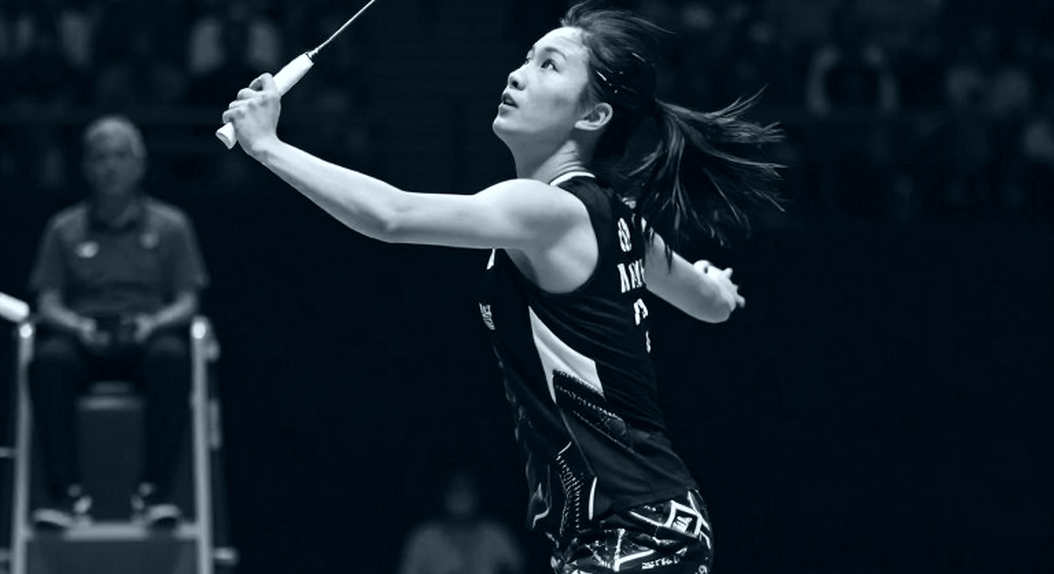
But a limit is clearly visible. Both finals are at Super 750 level. On the article's own accounting, Sindhu has not reached a Super 1000 final in 2026. The inference is that she is converting against the 8-20 ranked field but not yet against the top four.
That conclusion is an inference drawn from the article's own counting, not an explicit statement. It should be read with that caution attached.
Ranking and World Tour Finals impact
Reaching a second Super 750 final of the season matters for Sindhu's World Tour Finals qualification. The season finale takes the top eight, and any Super 750 final adds solid points to that race.
Whether this run lifts her into a protected top-eight seeding bracket in the world rankings cannot be determined from the available information. Nor is it known what her 2026 French Open result was or which points are expiring this season.
One point is clear — the 2026 season sits outside the LA 2028 Olympic qualification window. Under the standard four-year qualification calendar there is no quota pressure yet. This holds with medium confidence.
What the data does not show
Any honest analysis must state what is unknown. For this match, smash speeds, average shots per rally, unforced error counts and net-point win rates are all unavailable.
Likewise, the duration of An Se Young's semifinal is not stated, and that would be the most relevant physical indicator for this final. Sindhu's current world ranking is also not given in the available material, so it cannot be assessed.
Whether Sindhu played a tournament the previous week is also unclear. Schedule density and fatigue cannot be properly judged without that.
The final's framework: three questions
First, close-out ability. Leading 17-16 and losing 20-22 is a specific failure mode. Against the lowest-error opponent in the discipline, that exact failure is the most probable cause of defeat.
Second, the mid-match lull. If the concentration drop seen in game two repeats in the final, the World No. 1 will convert it into punishment immediately. A good start will survive; the score will not.
Third, physical reserves. A 73-minute semifinal followed by roughly one day's rest. If the final's rallies run long, that works against Sindhu.
All three answers point in one direction. Structurally, An Se Young holds the advantage in this final. That is not a single-source inference but a widely accepted style-matchup pattern, so confidence in it is high.
But it is not a prophecy. Sindhu has a route to victory, and it is clear: an early lead, short rallies, and risk-free badminton in the last four points. If those three things happen together, the 0-10 record will not matter.
Conclusion
Sindhu won her semifinal, and it is a significant win — reaching a Super 750 final at 31 is no small achievement. But the 'one-sided' framing does not match the score.
The real picture: dominance in game one, a failure to close game two, and a comeback under pressure in game three. It is a mixed picture, and it will be tested in the final by the strongest defensive player in the world.
On Sunday, Sindhu will have to fight not only her opponent but the volatility inside her own game. That is the real story of this final.