
World Cricket
Cricket in the Franchise Era: Money, Priorities and the Future of the Game
फ्रैंचाइज़ी क्रिकेट ने पिछले डेढ़ दशक में क्रिकेट की आर्थिक और प्रतिस्पर्धी संरचना बदल दी है। 2008 में आईपीएल से शुरू हुई यह प्रक्रिया बिग बैश लीग, सीपीएल, पीएसएल, द हंड्रेड और 2023 में शुरू हुई सा20, आईएलटी20 तथा मेजर लीग क्रिकेट तक पहुँच चुकी है। इसका सीधा असर अंतरराष्ट्रीय कैलेंडर पर पड़ा है — शीर्ष खिलाड़ियों का कार्यभार बढ़ा, चोट का जोखिम बढ़ा और राष्ट्रीय टीम बनाम लीग की प्राथमिकता का टकराव उभरा। टेस्ट क्रिकेट आर्थिक रूप से सबसे कमज़ोर कड़ी बना हुआ है, जबकि क्रिकेट के लॉस एंजिल्स 2028 ओलंपिक में शामिल होने से नए बाज़ार खुलने की संभावना है। महिला क्रिकेट में डब्ल्यूपीएल (2023) ने घरेलू खिलाड़ियों के लिए नया आर्थिक मंच बनाया। निष्कर्ष: संतुलित कैलेंडर, खिलाड़ी कल्याण के मानक और छोटे क्रिकेट देशों के लिए वित्तीय सहायता — तीनों ज़रूरी हैं, वरना खेल की वैश्विक प्रतिस्पर्धी संरचना कमज़ोर पड़ेगी।
When the Indian Premier League was launched in 2026, it was widely read as a domestic experiment — a tournament that might enrich the Indian board, but one whose capacity to reshape the international game was rarely taken seriously. Nearly two decades later, that experiment sits at the centre of cricket's entire ecosystem. The international calendar, players' priorities, boards' revenue streams, the valuation of broadcast rights and the career trajectories of young cricketers are all, broadly, governed by the gravitational pull of franchise cricket.
This is not a report on a single match, series or announcement. It is an analysis of a structural shift that matured quietly inside the sport and is now surfacing openly. The central question: if the game's economic engine is now located in domestic leagues, how does international cricket — Test cricket in particular — hold its ground?
T20 did not merely shorten matches; it rewrote the sport's arithmetic. Batting is now evaluated by strike rate more than average. An opener's value is measured by how many balls he faces in the powerplay and how many runs he extracts from them, not by how long he survives. A middle-order 'finisher' has become a distinct specialism — someone who can turn a match with twenty runs off ten balls. In bowling, yorkers, slower balls and mystery spin have gained weight, while long spells have given way to short, decisive ones. Data analytics made the 'matchup' the basis of strategy: which bowler is effective against which batter, at which phase, is now decided in advance.
The most visible expression of this shift is the IPL's Impact Player rule, which allows a team to introduce an additional specialist during the match. It takes T20 to its logical conclusion: splitting every role into separate players. The classical all-rounder is being displaced by players who do one thing exceptionally rather than two things averagely.
After the IPL came the Big Bash League (2026), the Caribbean Premier League (2026), the Pakistan Super League (2026), the Bangladesh Premier League, the Lanka Premier League and The Hundred (2026). In 2026 three new projects launched in the same window — South Africa's SA20, the UAE's ILT20 and America's Major League Cricket. That is not coincidence. All three are played in months when the international calendar has gaps, and all three target the same thing: share of the global player market.
Women's cricket followed the same trajectory. Australia's Women's Big Bash has long been established, and in 2026 the BCCI launched the Women's Premier League. Its impact is not confined to broadcast revenue — domestic women players gained, for the first time, a platform where performance carries direct economic value. The profile of players such as Smriti Mandhana and Meg Lanning is now built as much on league performance as on international returns.
The sharpest consequence of this expansion is pressure on the calendar. A top-tier cricketer now plays two or three leagues a year on top of commitments across three international formats. This is not simply a question of fatigue; it is a direct question about injury risk, recovery time and career length. Fast bowlers carry the heaviest load. Managing the workload of bowlers like Jasprit Bumrah, Pat Cummins, Shaheen Afridi and Trent Boult is now among the most complicated tasks facing national boards. Boards routinely rest them from bilateral series but cannot stop them playing leagues — because league contracts sit between the player and the franchise, outside board control.
This is where priorities collide. Playing for the national team was traditionally treated as the highest honour. But when two months of league income can exceed a young player's annual domestic earnings several times over, the incentive structure changes. Boards have responded by strengthening central contracts and tightening No Objection Certificate conditions for league participation. What has emerged is not a relationship of control but of bargaining.
The effect on quality runs both ways. On one hand, leagues have sharpened skills — the ability to perform under pressure, new bowling methods, cross-pollination of technique. Players such as Virat Kohli, Rohit Sharma, Kane Williamson and Babar Azam develop new understanding by playing alongside one another in different conditions. On the other, much of that technical evolution is specific to T20 and does not transfer to the longer format.
Economically, the franchise model has almost inverted cricket's revenue structure. Boards once depended on broadcast rights for international series and stadium attendance. Now league central rights, team sponsorships, jersey advertising and digital rights constitute a separate market altogether. Notably, that market rests on city-based identity — the spectator supports a team, not a country. It is a new kind of loyalty in cricket, closer to football club culture.
The weakest link in all of this is Test cricket. The format is financially loss-making almost everywhere except a handful of major series involving India, England and Australia. The ICC introduced the World Test Championship to give it competitive structure, and day-night Tests brought in new audiences. But the core problem persists: financial viability for smaller nations. When playing in T20 leagues is more lucrative for countries like Ireland, Zimbabwe or Afghanistan, commitment to the long format naturally declines. Decisions by players such as Ben Stokes to step away from a format to manage workload point to exactly this pressure.
The biggest step towards global expansion is cricket's inclusion in the Los Angeles 2028 Olympics. The decision was taken in 2026 and its significance is not merely symbolic. The Olympics means entry into new markets — the United States above all — the possibility of public funding, and acceptability in countries where cricket is not traditionally played. The launch of Major League Cricket is read as part of that strategy. The open question is whether two or three seasons can put down roots in the American market; historically, that experiment has been difficult for many sports.
Technology and broadcast are shifting too. Since the arrival of DRS, the right to review decisions has been opened up to the viewer, increasing transparency in umpiring. Smart replay, ball tracking, edge detection and now biomechanical data are being used in injury management. Streaming platforms have redrawn the geography of broadcast — any league can now be watched in any country, giving smaller leagues a global audience as well. It also strengthens individual player branding through digital clips and social media. The identity of players like Suryakumar Yadav or Rashid Khan is built today not only on international output but on their distinctive, clip-friendly skills.
There is a darker side to rapid expansion. As money grows, so does the risk of betting and match-fixing. Betting networks have grown around leagues in several countries, and anti-corruption units must remain permanently vigilant. The challenge is not only ethical but existential: if spectators begin to doubt the integrity of results, the entire economic model collapses. A second challenge is calendar congestion — national teams, leagues and ICC tournaments collide, and bilateral series are usually the first to be cut.
The need for balance is clear. Franchise cricket has given the sport money and popularity that the traditional model could not deliver in fifty years. But if leagues swallow the international calendar, the game will lose the global competitive structure that brought players from different countries onto one stage and enriched it.
The solution is political, not technical. The ICC needs a calendar with protected windows for leagues, safeguarded international commitments, and financial support for smaller cricket nations. Player welfare must have formal place in contracts — maximum match counts, mandatory recovery periods and standards for injury management.
Cricket is passing through its richest and most unstable phase. The money has never been greater, the options never more numerous, the pressure never so intense. The coming decade will determine whether cricket becomes a sport of a few powerful leagues with everything else marginalised, or one that learns to keep all three formats alive while converting market energy to its advantage. The first path is easier. The second is necessary.
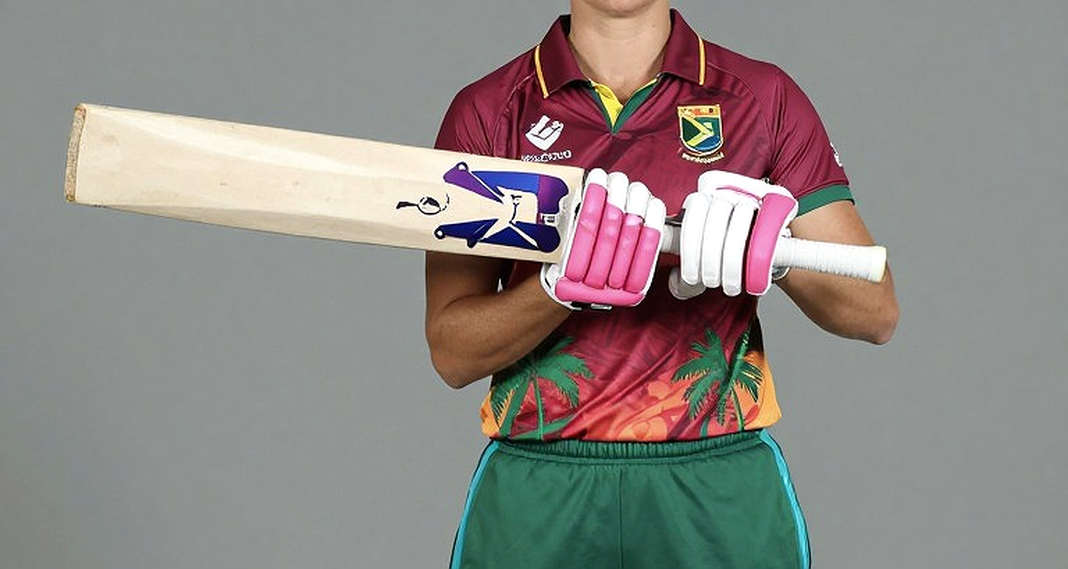
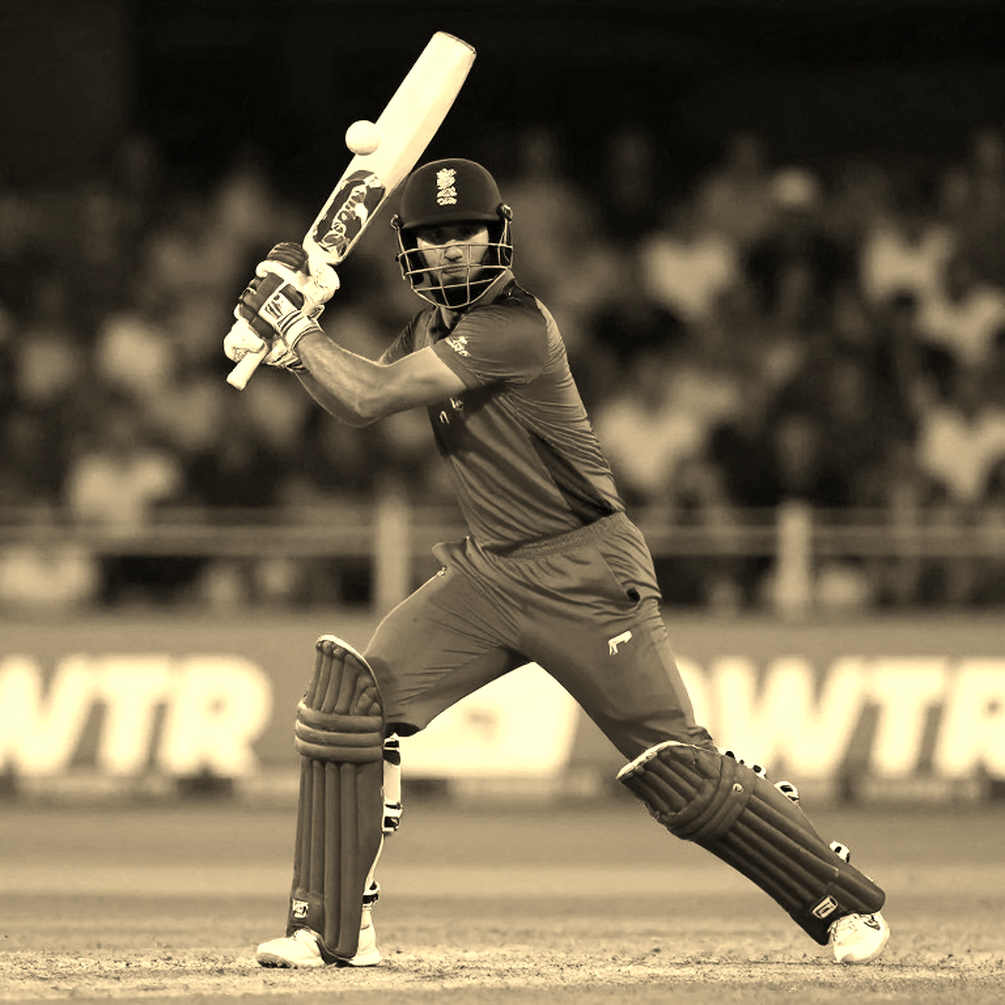
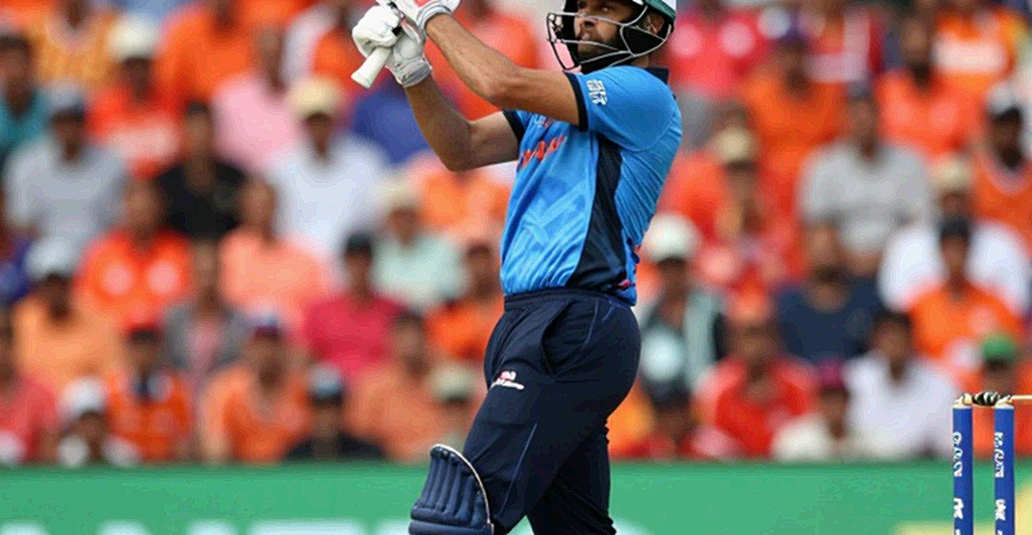
संबंधित खिलाड़ी
अनुशंसित
India A's Three Four-Day Games Go to Television for the First Time: Sony's Call Is a Broadcast Story Before a Cricket One2026-10-22
Test Hundreds From No.9 Or Below: Wisden's Quiz, the Format Math, and the Soft Data of Batting Order2026-10-25
The Empty File: Cricket Coverage's Real Crisis Is Not the Wrong Story, It's the Filled-In One2026-11-01
The Valid Empty Shell: When a Cricket Data Pipeline Lied Without Making a Sound2026-11-01
Auditing Zero: What an Empty Cell in Cricket's Data Supply Chain Actually Reports2026-10-22
अनुशंसित
Second After Bradman: The Question Wisden's Quiz Left Unanswered Is the Real Story2026-10-22
South Australia Hit Back, the 422 Chase Is No Longer Just a Dream2026-10-30
West Indies Won in Dhaka, but the Real Story Is the Morning Pitch and Bangladesh's Arithmetic2026-11-01
Empty Cell, Full Claim: An Audit of Cricket Analytics' Null Protocol2026-11-01
When Every Field Returned N/A: A Lesson in Silent Failure Across Cricket's Data Chain2026-10-22