
Six Overs in Hobart: What Victoria's 138-Run Win Leaves Out of the Scoreboard
**मुख्य उत्तर:** विक्टोरिया ने होबार्ट में टैस्मानिया को डीएलएस पद्धति से 138 रनों से हराया, क्योंकि बारिश से 35 ओवर की संशोधित चेज़ में टैस्मानिया 137 रन पर ढेर हो गई। मिचेल पेरी की शुरुआती स्पेल, पाँच ओवर में छह रन देकर दो विकेट, ने मैच का रुख़ तय किया। **मुख्य तथ्य:** - विक्टोरिया ने 50 ओवर में सात विकेट पर 304 रन बनाए; टैस्मानिया का संशोधित लक्ष्य 35 ओवर में 276 रन था। - टैस्मानिया 25.2 ओवर में 137 रन पर ऑलआउट हुआ; 138 रन का अंतर डीएलएस पार-स्कोर 275 में से 137 घटाने पर बना। - मिचेल पेरी ने छह ओवर में 4-9 लिए, जिसमें शुरुआती पाँच ओवरों में 2-6 शामिल रहा। - मैथ्यू शॉर्ट ने 91 गेंदों पर 70 रन बनाए; कैंपबेल केलावे ने 71 गेंदों पर 69 रन। - टिम डेविड 13 रन पर आउट हुए; यह टैस्मानिया के लिए 2021 के बाद पहला लिस्ट-ए मैच था। **स्रोत:** cricket.com.au की मैच रिपोर्ट, क्रिकेट ऑस्ट्रेलिया वन-डे कप (लिस्ट-ए, 50 ओवर) | आंकड़े cricsultan.com के मैच-डेटा सूचकांक से मिलान योग्य। **संबंधित प्रश्न-उत्तर:** प्रश्न: 138 रन का अंतर असली प्रदर्शन-अंतर क्यों नहीं है? उत्तर: क्योंकि यह डीएलएस पार-स्कोर (275) और टैस्मानिया के 137 के बीच का अंतर है, विक्टोरिया के 304 और 137 के बीच का नहीं। प्रश्न: टिम डेविड के वन-डे विश्व कप दावे पर यह पारी क्या बताती है? उत्तर: कुछ नहीं — 10 प्रति ओवर की दर वाली बाधित चेज़ में 13 रन का विश्लेषणात्मक महत्व लगभग शून्य है; असली संकेत 2021 के बाद पहला लिस्ट-ए मैच होना है, जो फ़ॉर्मैट-एक्सपोज़र की कमी दर्शाता है। प्रश्न: कैंपबेल केलावे के 'भविष्य का
The rain arrived in Hobart before the cricket did, and Tasmania chose to field. By the seventh over the scoreboard read 4-40. The commentary box reached for the word 'crush'. I had a sheet of paper in front of me and I was counting balls, not adjectives.
I have an old habit. When I read a scorecard, I look first at the boxes that were never printed — which bowler bowled which overs, which spell began with which wicket, how many balls a batter left alone. Victoria's 138-run win in this Cricket Australia One-Day Cup fixture is perfectly legible in scorecard language. What explains it sits on a six-over sheet: Mitchell Perry's opening spell of 2-6 in five overs, which decided the shape of the match before the weather got a say.
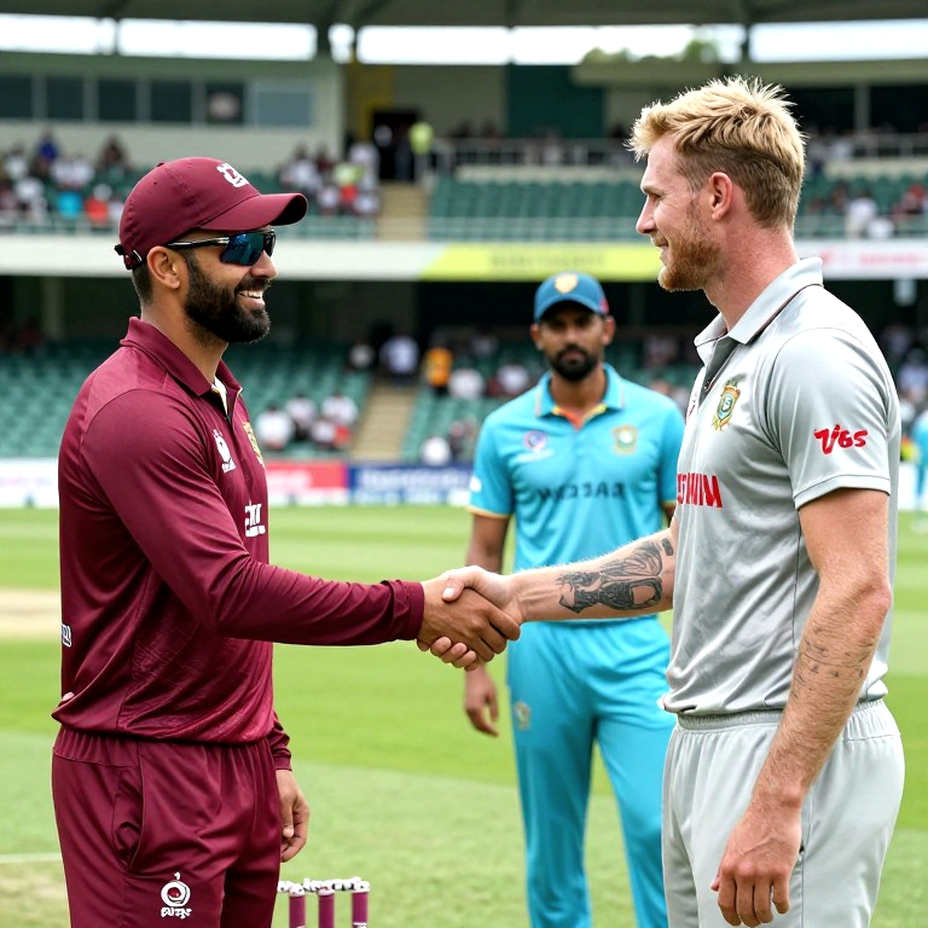
"The smallest entry in the ledger explains the loudest headline." It is written on the first page of my ledger, and Hobart is its freshest illustration.
The canvas
Establish the frame first, because almost every mistake in reading this match comes from losing it. This is a 50-over domestic List A fixture. Victoria batted first and made 7-304 in their fifty. Matthew Short made 70 off 91, Rogers 53 off 49, and the opening stand produced 92 at better than a run a ball. Campbell Kellaway (69 off 71) shared 79 for the second wicket. The lower order carried the total to 304, which is the least discussed part of the innings.
Then the rain came. Tasmania's target was revised from 305 in 50 overs to 276 in 35 — the requirement jumping from 6.1 an over to 7.89. They were bowled out for 137 in 25.2 overs, and the margin was recorded as 138 runs. The report calls it a bonus-point win, which means the size of the victory carried table value beyond the win itself. The exact bonus-point threshold sits in the playing conditions, and it is not in the material I have, so I will not invent it.
One thing the report does not carry, and it nags at me: a pitch report. A 4-40 collapse and a six-over 4-9 return both whisper that the ball was doing something. That is inference from outcome, not evidence from the surface. I write it down and move on, because the day we seat inference in the chair of fact, every other calculation in the file goes crooked too.
The arithmetic of 138
Here is the technical point almost every reader of this scoreline gets wrong.
Victoria made 304. Had Tasmania batted fifty overs, they would have needed 305. The rain cut the innings to 35 overs, and the DLS resource table set Tasmania's par score at 275. The target is always par plus one — hence 276. Now watch the margin: Tasmania were bowled out for 137, and 275 minus 137 is exactly 138. The headline figure is not the distance between 304 and 137. It is the distance between the DLS par score and 137.
That matters. When a side is bowled out, DLS treats it as having exhausted its resource entirely — ten wickets gone, so unused overs are worth nothing. The consequence is that large margins in all-out rain-affected games always compress two different things into one number: genuine bowling dominance and a convention of arithmetic. In my ledger they get separate columns.
Second point, which takes this match beyond the weather. Tasmania's 137 came at 5.41 an over. Sustained across fifty overs that is roughly 270, a long way short of 305. The rain did not change the result; it changed the size of the defeat. Even in a full 50-over chase this side was not close. What DLS did was convert a chase that had already died into a race with a frightening asking rate.
Third point, which the report steps around. A target of 276 in 35 overs is not a miscarriage; fewer overs with ten wickets in hand is a standard resource-table outcome. But the practical effect was that Tasmania had to score at 7.9 from the first ball, which is a materially different match from a 50-over chase at 6.1, even with the same twenty-two players on the field. Read it as normal DLS compression with a real and severe practical bite, rather than as a burden imposed on the chasing side.
Six overs, four wickets
Perry's spell is the strongest single performance in the report and also the least assessable one. Four for nine off six overs, economy 1.5. An opening spell of 2-6 in five. Bowling at 4-40, with the scoreboard pressing and the ball likely doing something, is maximal favourability, and there is no shame in saying so.
Then I have to stop. The material gives no season aggregate, no career List A average, no injury history. The honest verdict is this, stated plainly: a high-impact single performance whose career significance is currently unknown. Confidence high on the impact, low on the meaning.
If a player-of-the-match award followed, it is a phase award, not a workload award. Six overs out of 25.2 is about a quarter of the innings; the recognition belongs to the leverage of new-ball wickets at 4-40, not to the volume delivered.
The transferable signal is the opening spell. Wicket-taking with the new ball in the first five overs is the skill that projects upward. The six-over 4-9 headline projects less well, because it contains tail-end wickets and a broken chase. The five-over spell is information; the six-over figure is noise.
One column stays deliberately blank: workload. Six overs in a 35-over match is a managed load, which is good news, but for a fast bowler I always want the injury file. This source does not have it, so the line remains empty rather than filled with a guess.
Short's 70 off 91: occupation as a plan
Short's 70 came off 91 balls, a strike rate near 77. The modern ODI opener benchmark sits around 85-95, and an attacking opener's role asks for 95-plus. The number says clearly that this was an innings of occupation, not dominance.
The report's phrase — that he 'confirmed his white-ball credentials' — is only half supported. Seventy off ninety-one inside a total of 304 proves he can hold a crease. It does not prove the boundary-dominant hitting that the phrase implies in the contemporary one-day game.
There is a detail the report leaves out and the ledger should hold. The opening stand of 92 came at better than a run a ball while Short individually was going at 77 — which means Rogers, at 53 off 49, was doing the striking. The correct way to read a two-paced partnership is by the two ends, not by the aggregate run rate. On that reading Short's innings was structurally valuable to Victoria even while it was slow.
The real issue is variance, not capability. Three consecutive ducks against Pakistan and Bangladesh, three fifties in the seven innings before that — that is a bimodal output profile, the signature of a player whose selection is permanently argued. At 30 he is at the ODI batting peak of 27 to 33, which means the runway is shortening.
And the warning that matters most: do not transfer this innings to the international arena. A domestic List A knock in Hobart says nothing about Short against the new ball on flat subcontinental decks, which is exactly where the three ducks came. Confidence: high.
Kellaway: the gap between the label and the ledger
Here the report arrives at its largest contradiction and stops short of it.
Sixty-nine off 71 at a strike rate near 97 is a good List A contribution. Then you pick up the same player's red-ball file. Last summer in the Sheffield Shield: 506 runs at 26.78 with one century, against a top-order par of roughly 35 to 40. This summer: 70 runs in four innings. For Australia A against India A: 2 runs in total, at the level immediately below Test cricket.
He is 23, so the development window is open and I am not closing it. The question is what documentary basis the 'future Test batter' label currently rests on.
The answer is a 2026 innings — 105 not out against an attack featuring Rabada, Ngidi, Jansen and Nortje. That innings is real, it is a high-end signal, and I will not discount it. It is also four years old, and that is the whole point: one afternoon is doing enormous narrative work while the red-ball record since then argues the other way. The numbers do not support imminent Test selection, whatever a 69-ball 71 in a one-day match says.
I want to be clear about what I am arguing against, because this is the most sensitive part of the job. Not the player. The label — the one that attaches after a single innings and then travels for three seasons without being re-examined. That is the standard procedure in domestic cricket: one fine knock, one good quote, and then the phrase 'future player' begins to move under its own steam. The ledger has to ask the phrase: which date, which level, how many innings.
Confidence high that the current red-ball numbers do not support imminent Test selection. Confidence medium that he clears 35 in the next two Shield summers, which at 23 is entirely possible and would retrospectively make the label correct. Both lines can be written, and both should be.
David's 13: a format gap, not a form problem
Now the innings with close to zero analytical value, as the report itself concedes. Tim David made 13. After the rain break the requirement was around ten an over. Walking in there is a genuine hiding to nothing, and the report says so.
The finding is not the 13. The finding is that this was his first List A match for Tasmania since 2026. A player positioning for an ODI World Cup recall while playing his first 50-over state game in four years has an exposure problem, not a form problem. Selection in the one-day format is normally built on accumulated List A volume: innings played, innings built in different conditions, innings constructed against spin through the middle.
Here is the conflation domestic reporting falls into most often — reading commercial value as sporting value, and doing it across formats. David's market standing comes from T20 hitting. A World Cup ODI asks for longer innings construction and spin negotiation through the middle overs. The report treats 'Australia T20 star' as transferable credibility. Confidence high that his List A record is thin enough that a recall would need a deliberate policy exception rather than a form case; confidence low-to-medium that there is a promotional interest in keeping the World Cup ambition in print.
What the report does not carry
Years of pulling domestic scorebooks have taught me one habit: write down what is missing before you write what is known. In 2026, at the Under-16 trials at Azad Maidan, I began a handwritten ledger — 214 trialists from 12 maidan clubs, 38 practice matches, 3,860 balls faced, 1,140 overs bowled. In 2026 I spent six weeks at the Under-19 camp in BKC: 36 players, 22 practice matches, 1,480 balls, 540 overs, 14 coach interviews. The most useful discipline from that period was refusing to fill a blank in the camp sheet with an inference.
Hobart leaves three boxes blank. No pitch report, so the surface cannot be characterised — calling it seaming is inference at low-to-medium confidence. No season aggregates, so every conclusion is sealed inside a single match. And no toss rationale: Victoria were asked to bat, meaning Tasmania chose to field on a rain-forecast morning, and whether that was a defensible read cannot be judged without the pitch and weather data the report omits.
I give those blanks space because domestic cricket's reporting problem is exactly this. We have the score, not the story. The score then gets read as if it were the story, and inference quietly takes the chair.
The rain changed the shape, not the result
The report's causal order runs: rain came, target changed, chase became hard, Tasmania lost. It is an attractive order because it assigns responsibility to an outside factor. But a DLS revision only becomes decisive if the chasing side is still alive when the target moves. At 4-40 Tasmania were already beaten at cricket. The decisive event was Perry's new-ball spell, not the weather. The report's own read — never in the hunt — is supported by the scoreline rather than by the revised target.
My second disagreement is with the word 'crush'. A 138-run margin built inside 25.2 overs is not automatically a thrashing; it is the arithmetic product of a side exhausting its resource. The thrashing happened in the first five overs, at 2-6 and then 4-40.
The third disagreement is larger than the match. Two of the headline names here, David and Short, are presented mainly through a T20 and ODI national-selection lens while the evidence is domestic List A. That is the source's central trap, and it is a widespread habit: the domestic 50-over competition used as a press-release vehicle for T20 selection narratives, with the competition's own stakes — bonus points, the table, a domestic player's livelihood — pressed underneath.
One point in the report's favour, and it belongs in the file: Victoria won this match in Hobart, Tasmania's home ground. Home-ground bias is not in play, because the winning side was the visitor. That sounds small. In domestic records it is not, because home advantage usually hides in the toss, in pitch knowledge, in local air.
What to watch
Perry's six overs are the strongest evidence and the weakest witness. Watch him on a dry, flat surface with the new ball, and see whether the wickets come in the first five overs. That is the real examination.
For David the question is not 13 runs but the next twenty List A innings. If he is in a World Cup conversation, selection policy has to explain how volume not accumulated since 2026 gets replaced.
For Kellaway the decisive thing is the next Shield summer, not another one-day knock. Whether 26.78 crosses 35 will decide whether the label turns out to have been early or hollow.
For Short, at 30, it is the next seven innings — the ones that decide whether a bimodal profile becomes a record or a permanent argument.
As the coverage budget for domestic one-day cricket slides toward the BBL and the franchise leagues, the question stops being who won. It becomes who is filling the ball-by-ball sheet for a 25.2-over innings — and if nobody is, on what evidence will we conduct the next selection argument?
"The notebook opens where the scoreboard never looked." In Hobart the scoreboard wrote 138. The ledger wrote six overs.