
Abhishek Sharma: A 38-Ball Blitz and the Unfinished Answer to the Flat-Track Debate
अभिषेक शर्मा 26 वर्षीय भारतीय बाएं हाथ के सलामी बल्लेबाज हैं, जिन्होंने वेलिंगटन में न्यूजीलैंड के खिलाफ 38 गेंदों पर 113 रन बनाए — स्ट्राइक रेट लगभग 297, 9 चौके और 11 छक्के, तथा कुल रनों का 90.3 प्रतिशत बाउंड्री से। वे आईसीसी टी20 अंतर्राष्ट्रीय बल्लेबाजी रैंकिंग में फिर से नंबर एक पर पहुंचे हैं, लेकिन उनका अब तक एक भी वनडे या टेस्ट कैप नहीं है। बताए जा रहे करियर आंकड़े — 71 टी20 में 2,267 रन, औसत 33.33, स्ट्राइक रेट 196, 4 शतक — अभी स्वतंत्र रूप से सत्यापित नहीं हैं; यह भी स्पष्ट नहीं है कि '71 टी20' का अर्थ केवल टी20 अंतर्राष्ट्रीय है या सभी टी20 मैच। 'फ्लैट-ट्रैक बुली' का आरोप इस एक पारी से निष्प्रभावी नहीं होता, क्योंकि पिच रिपोर्ट, मैच परिणाम, टॉस और विपक्षी गेंदबाजी की गुणवत्ता सार्वजनिक रूप से उपलब्ध नहीं कराई गई। उनका वास्तविक, मापने योग्य मूल्य पावरप्ले में रन रेट बढ़ाना है — सनराइजर्स हैदराबाद में ट्रैविस हेड के साथ यही भूमिका दिखती है। निष्कर्ष: वे एक विरल और विश्व स्तरीय टी20 पावरप्ले खिलाड़ी हैं, जिनका बहु-फॉर्मेट भविष्य अनिर्णीत है और जिनकी बाजार-कीमत खेल-प्रमाण से आगे चल रही है। यह जानकारी केवल खेल-विश्लेषण के लिए है, सट्टेबाजी सलाह नहीं।
Abhishek Sharma's 113 off 38 balls against New Zealand in Wellington is an extraordinary innings — there is no disputing that. Nine fours, eleven sixes, a strike rate of roughly 297, and 90.3 percent of his runs coming from boundaries. Twenty of the 38 deliveries he faced produced a four or a six, while the other 18 yielded just 11 runs. That profile tells us the innings was not merely aggressive but almost entirely boundary-dependent. Yet before this knock is turned into 'the name of fear', 'the answer that silenced the critics', or 'Indian cricket's new idol', one direct question needs asking: can a single innings settle a technical charge that is about surfaces and conditions?
The innings is exceptional, but its evidentiary base is narrow
Scoring such an innings in New Zealand, away from India, is genuinely a point in his favour. Wellington's wind and early seam movement are real variables in cricket. But the available information contains no pitch report, no match result, no toss, no assessment of the opposition bowling, and no data on how the other batters fared in the same match. This is the central gap in the whole debate. The phrase 'whether there is grass on the wicket or not' reads less like a statement of fact and more like a defensive device. If the surface assisted seam and swing, the innings becomes strong counter-evidence to the flat-track-bully charge. If the surface was flat, the same innings reinforces that charge. Without pitch data, the question cannot be answered.
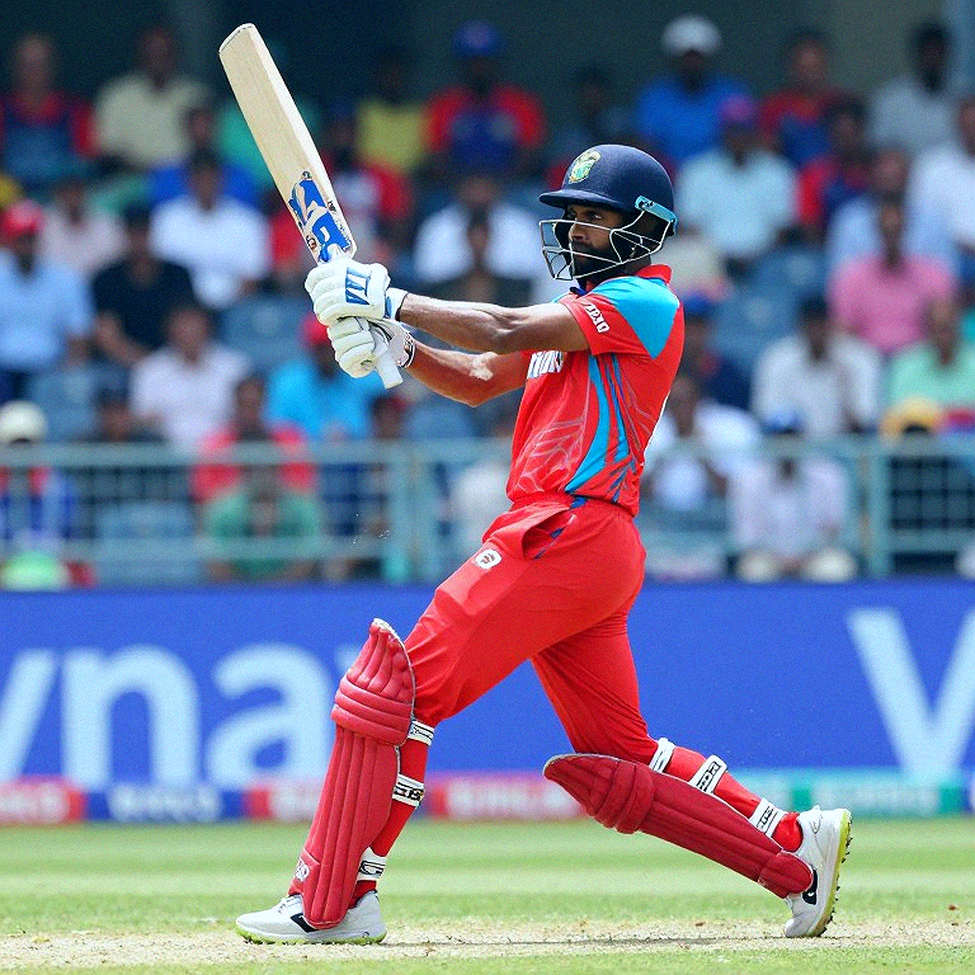
It should also be remembered that single-innings variance in T20 is extremely high. One flat surface, one poor bowling plan, or one dropped catch can generate an outlier score that does not reflect a player's underlying level. Using one innings as proof and then deriving multi-format greatness from it are two different operations.
The career numbers: verification is essential
The figures being circulated are 2,267 runs in 71 T20s at an average of 33.33, a strike rate of 196, and four centuries. Arithmetically these are internally consistent, but 71 T20 caps and a strike rate of 196 at the age of 26 is a combination that must be cross-checked against ICC and ESPNcricinfo records. It is possible that '71 T20s' means all T20 cricket rather than T20 internationals, or that 196 is a recent-window strike rate rather than a career rate. Until that is settled, any conclusion about 'sustained dominance' stands without a foundation. In an innings where 90 percent of the runs came from boundaries, the non-boundary strike rate was around 61 — meaning no secondary mechanism of rotation or accumulation was visible.
The most important and least discussed fact is this: Abhishek has not a single ODI or Test cap. Every data point therefore comes from the format with the shortest feedback loop and the widest variance. At 26 he is at the entry point of the batting peak, roughly 27 to 33, but the longer single-format specialisation persists, the harder multi-format conversion becomes. This fact tends to be pushed to one side in the debate, when it is the most decisive one.
The ranking: an indicator of form, not proof of dominance
Abhishek has regained the No. 1 position in the ICC T20I batting rankings — that is a fact. But the ranking's mathematics rests on a weighted assessment of recent performance adjusted for opposition strength. One marquee series can lift a player to the top without years of sustained output. Being No. 1 is therefore evidence of recent form, not of long-term dominance. And the ranking does not determine selection — that distinction must also be preserved.
The team picture: the competition is internal, not external
India's T20 top order is among the deepest in the world. Sanju Samson and Vaibhav Suryavanshi are named as contenders for the same slots. Sharda Ugra's line — that everyone thought Vaibhav would be the next superstar, but Abhishek came and snatched that place — actually describes how the Indian star-making system works: there is one superstar slot, and occupancy is decided by recency. That is an observation about the media market more than about cricket.
It is true that with Rohit Sharma and Virat Kohli in the twilight of their careers a succession window is open. But who the successor is cannot be settled by one innings and one ranking. Mohammad Kaif's public demand that he be given an ODI opportunity shows that the selection debate is live, not resolved.
Technique: the claim is large, the evidence is testimonial rather than analytical
Salman Butt says Abhishek carries 'calculated risk, not blind slogging' — that is technical commentary, not data. Verifying it would require a distribution of dismissal modes (how often stumped or LBW playing across the line, how often caught in the deep) and a scoring split by delivery type (short ball, full ball, spin, left-arm pace). None of that has been supplied. However sincere the praise, it cannot substitute for technical proof.
One thing is worth noting — his strength and his weakness are two sides of the same trait. Ninety percent of runs from boundaries, limited room for rotation, and a strike rate of 196 amount to a high-variance profile. For exactly this profile, asking the flat-track question is not technically wrong; what is wrong is that neither the charge nor the rebuttal has been proven. On slower, lower-bounce surfaces where the ball does not come onto the bat, this profile's output can drop disproportionately — that is the real technical basis of the debate, and it goes unanswered.
It is also worth comparing that the most measured claim in the entire discussion comes from an opposing player, Daryl Mitchell — some of his shots were world-class, well played. That is a bounded, in-the-moment and therefore credible assessment. Against it, phrases like 'new-generation superstar' or 'kicked the door down' are unbounded claims.
IPL and commercial value: brand before proof
The partnership with Travis Head at Sunrisers Hyderabad is the most practical insight in the whole discussion. The pair are said to decide the fate of the match in the first six overs. That means his real cricket value is powerplay run-rate inflation — a measurable, highly prized T20 skill, but a role value, not a format-transcending one. A left-handed Indian powerplay-destroying opener is among the thinnest categories in the world, and it is that scarcity which drives both his selection security and his market price.
The second half of the material concerns endorsements, brand deals and being one of the most marketable faces of the new generation. It is no accident that the report feels the need to insist that his real identity is his bat rather than off-field glamour — such a sentence is written only when the visible trend runs the other way. Commercial value is running ahead of sporting proof; the brand asset is being monetised before the sporting asset has been de-risked. IPL surfaces and short boundaries are naturally batting-friendly — that is precisely the mechanism by which flat-track reputations are made.
The least discussed risks
First, career-shape risk. Being the best in the world at one format at 26 while uncapped in the other two is a stable outcome only if the format landscape stays as it is. It will not — ODI World Cups and WTC cycles will keep defining legacy and central-contract value. Second, profile volatility: a batter with 90 percent boundary dependency can be disproportionately affected by a single change in conditions. Third, hype backlash: 'new idol' and the Gavaskar–Tendulkar–Kohli–Rohit lineage are the most loaded comparison frameworks in Indian cricket, and their historical fulfilment rate has been very low. Building such a framework after one innings raises risk rather than lowering it. Fourth, injury and workload — there is no data, so no conclusion can be drawn. What should be stated plainly is that there is no signal here of betting, corruption or governance controversy.
What to watch next
The next three to five innings, especially on surfaces with movement. The non-boundary strike rate — if it stays below 90 consistently, boundary dependency will be proven structural. ODI selection announcements and selectors' public comments. The selection status of Sanju Samson and Vaibhav Suryavanshi. And if brand deals keep growing through a dip in form, that will signal that commercial value has fully decoupled from sporting value.
Conclusion
The real story is not that Abhishek silenced his critics. The real story is that India has produced a world-class T20 powerplay asset whose multi-format future is entirely undecided, and whose market price is being set before that decision. The 38 balls in Wellington prove an outstanding innings. They do not prove a career. Bridging that gap requires time and innings — not statements.
Disclaimer: This report is based on public information and available analysis. It is intended solely for sports-information and analytical reference and does not constitute betting advice, odds guidance, or any prediction of results. Cited career statistics are subject to verification, and all inferences are presented with uncertainty.