
Asian Cricket
The New Geography of Asian Cricket: Leagues, Rhythm and the Long Run
**एशियाई क्रिकेट क्या है?** एशिया में क्रिकेट का प्रशासनिक और प्रतिस्पर्धी ढाँचा, जिसमें पाँच पूर्ण सदस्य (भारत, पाकिस्तान, श्रीलंका, बांग्लादेश, अफ़ग़ानिस्तान) और कई सहयोगी सदस्य शामिल हैं। **एशियाई क्रिकेट का सबसे बड़ा केंद्र कौन है?** भारत — आईसीसी राजस्व में सबसे बड़ा हिस्सा, सबसे बड़ा प्रसारण बाज़ार और सबसे मज़बूत घरेलू ढाँचा। **एशिया की प्रमुख फ्रेंचाइज़ी लीगें कौन सी हैं?** इंडियन प्रीमियर लीग (भारत), पाकिस्तान सुपर लीग, लंका प्रीमियर लीग (श्रीलंका), बांग्लादेश प्रीमियर लीग और इंटरनेशनल लीग टी20 (यूएई)। भारत में महिला प्रीमियर लीग भी संचालित है। **सबसे तेज़ी से उभरती एशियाई टीम कौन है?** अफ़ग़ानिस्तान — पूर्ण सदस्यता के बाद स्पिन गेंदबाज़ी के बल पर अंतरराष्ट्रीय स्तर पर लगातार प्रतिस्पर्धी प्रदर्शन। **एशियाई क्रिकेट की तीन बड़ी चुनौतियाँ क्या हैं?** (1) अंतरराष्ट्रीय और लीग कैलेंडर का टकराव व खिलाड़ियों पर कार्यभार, (2) सहयोगी देशों के लिए स्थायी वित्तपोषण और नियमित प्रतिस्पर्धा की कमी, (3) प्रशासनिक पारदर्शिता और खिलाड़ी कल्याण नीतियों का अभाव। **क्या एशिया में टेस्ट क्रिकेट को ख़तरा है?** टी20 लीगों की बढ़ती संख्या और आर्थिक आकर्षण के कारण टेस्ट क्रिकेट के लिए समय व प्राथमिकता घट रही है, हालाँकि भारत जैसे देशों में घरेलू लंबी प्रारूप प्रणाली अभी मज़बूत है। **महिला क्रिकेट की स्थिति क्या है?** तेज़ी से बढ़ रही है — डब्ल्यूपीएल और बढ़ते अंतरराष्ट्रीय कैलेंडर से पेशेवर रास्ते खुले हैं, पर वेतन, प्रसारण कवरेज और निवेश में असमानता बनी हुई है। **2028 ओलंपिक का क्या महत्व है?** लॉस एंजिल्स 2028 में क्रिकेट के शामिल होने से एशियाई सहयोगी देशों को वैश्विक मंच और नई प्रोत्साहन-व्यवस्था मिलने की उम्मीद है।
Over the past two decades, the centre of gravity in world cricket has shifted from west to east. That shift is not merely about trophies; it shows up in money, audiences, calendars and regulation. Asia is today both the largest producer and the largest consumer of international cricket. Five of the ICC's twelve full members — India, Pakistan, Sri Lanka, Bangladesh and Afghanistan — belong to this continent, and their contribution to the game's broadcast economy is decisive. Yet there is an inequality inside this strength, and that inequality will define the debate of the coming decade.
India is the centre of this structure. That may sound diplomatically uncomfortable, but at the level of facts it is uncontested. The Indian board's share in the ICC's revenue distribution model is the largest, and this is why the bilateral calendar, broadcast scheduling and even hosting decisions are shaped from this centre. It is easy to call this a power game, but it is really a market logic: audiences are where advertisers are, and advertisers are where the game's money is. The question is whether this centralisation serves the sport in the long run, or whether it erodes the competitiveness on which cricket's popularity rests.
The clearest answer to that question lies in the franchise ecosystem. The Indian Premier League did not just give domestic talent a stage that had previously been unimaginable; it unlocked an alternate and deeply attractive income stream for cricketers worldwide. The Pakistan Super League, the Lanka Premier League, the Bangladesh Premier League and the UAE's International League T20 followed the same template, though they stand at very different points of scale and stability. Countries such as Nepal, Oman and Malaysia are also using domestic T20 leagues to build their economies and talent pipelines. The whole system shares one flaw: it depends almost entirely on T20.
While league expansion raises player incomes, it sharpens the workload crisis. A modern Asian international cricketer's year is split three ways — national duty, franchise contracts, and in some cases leagues in multiple countries. In this year-round competition, Test cricket is often left behind, because it consumes the most time and returns the least revenue. For Asian boards this is not a theoretical debate but a daily management decision: who rests, who is released to a league, who is kept fresh for the Test championship. Those decisions will determine how competitive Asian sides remain in red-ball cricket over the next decade.
India's position is distinctive because it has depth. The domestic structure — first-class tournaments, A-tours and a growing franchise system — creates a reservoir that keeps bench strength consistently high. When a senior player is absent, the team's structure does not wobble; that is the system's biggest achievement. But this depth has a cost: with an abundance of talent, selection debates never end, and after every series the question of who should have played takes on fresh life in media and on social platforms. That debate is part of the sport, but it can also become a mental-health burden on players — an aspect Asian cricket has only recently begun to discuss openly.
Pakistan's story is different in character. Its greatest strength has always been fast bowling. Bowlers who emerge from rough grounds, tape-ball culture and informal competition reach the international stage without a large institutional base, and this is not an anomaly but a pattern. Yet the sustainability of that pattern has been questioned repeatedly, because the financial stability of domestic competition and the availability of international hosting have both depended on external factors. The PSL has partly filled that gap, giving domestic players a chance to play alongside foreign stars, but the system still struggles with event security and continuity. The instability visible in Pakistan's batting is usually described not as a structural problem but a preparation problem — the gap between domestic quality and international standards.
Sri Lanka is a cricket culture whose heritage is larger than its present. Spin bowling and technical batting have been its signature, and on Asian pitches that expertise makes it dangerous. But economic pressure, administrative instability and a frequently changing contract framework have denied the team a stable environment over long periods. The Lanka Premier League created a platform for domestic players, but a small market means it cannot compete with the bigger leagues. The direct consequence is that Sri Lankan players often prefer overseas leagues, and the national calendar has to be adjusted accordingly.
Bangladesh's story is the story of a gap between expectation and achievement. Cricket's popularity in the country is immense, the domestic structure is extensive, and junior-level performances keep improving. Yet the run of reaching decisive stages at major tournaments has not been strung together. Coaching continuity, fitness standards and decision-making under pressure are the three areas most debated in Bangladeshi cricket. The good news is that Bangladesh is no longer only strong at home; its performances in foreign conditions are improving gradually, and that change will be its real test in the years ahead.
Afghanistan is the fastest-moving picture in Asian cricket. In a few short years the team travelled from refugee-camp grounds to full membership, and it is now not merely a participant but a competitor. Spin bowling became its identity, but in recent years fast bowling and top-order batting have progressed too. Much of the credit for this rise goes to Afghan players' success in franchise leagues, which gave them experience of high-pressure matches. At the same time, a fair question is whether the domestic structure is developing at the same pace — because in the long run teams run on systems, not individuals.
The most overlooked story in Asian cricket belongs to the associate nations. Nepal has proved through both popularity and performance that it is not merely a 'participant'. Oman, despite limited resources, has repeatedly found a place in global tournaments. The UAE has long been the backbone of international cricket as a neutral host, and is now trying to place itself at the centre of the sports economy through its own franchise league. Countries such as Hong Kong and Malaysia are developing talent at their own level. The expansion of the T20 World Cup has given these teams a platform, and cricket's inclusion in the 2028 Los Angeles Olympics is expected to create a new incentive structure for them. That expansion is good news for the game, provided it does not become merely symbolic participation and these teams get genuine opportunities for regular competition.
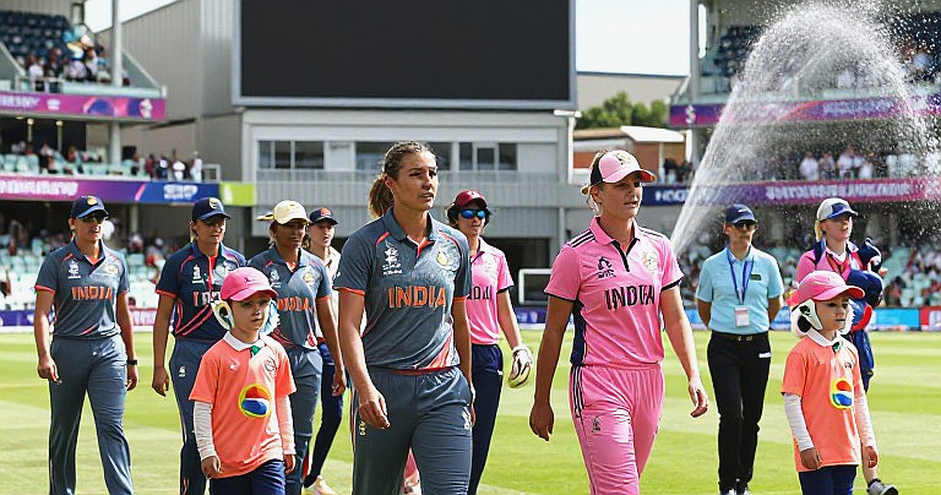
Women's cricket is the fastest-changing sector in Asia. The launch of the Women's Premier League in India has opened a professional pathway for domestic women cricketers, and the effect is already visible in international performances. The women's teams of Sri Lanka, Pakistan and Bangladesh have also raised their competitiveness. Yet inequalities persist — in the number of matches, broadcast coverage, pay and investment at junior levels the gap remains wide. The real test for Asian women's cricket will be whether domestic leagues expand here as they did in the men's game, or whether the process remains confined to a few countries.
Behind all of this sits an administrative truth: the political architecture of Asian cricket is highly centralised. The language of cooperation is common at the Asian Cricket Council's forums, but in practice bilateral relations, broadcast rights and hosting decisions are often settled by the priorities of the larger boards. The long closure of bilateral series between India and Pakistan is the clearest example — audiences in both countries crave the contest, sponsors want it, but political reasons confine it to multilateral tournaments. The trend of 'hybrid models', where matches are staged in neutral countries, is a consequence of the same geopolitical reality. It keeps the game running, but at a price: contests move away from home crowds and the cultural weight of the event diminishes.
There is an intriguing shift on the technical side too. Asian pitches have traditionally been considered spin-friendly, but the demands of franchise cricket and the popularity of high-scoring contests have begun to change their character. This has two consequences. First, Asian batsmen now arrive better prepared against pace, because they face high-quality fast bowling at domestic level. Second, some experts worry that the patience and technique Test cricket requires are being undermined, because young players adapt to T20 demands during the most important years of their development.
Looking at this whole landscape, three challenges stand out. The first is calendar disorder. There is no central regulator deciding which league is played when, and the result is that players are often forced to choose under unbearable workloads. The second is sustainable funding for Tier Two. Giving associate nations a place in major tournaments is not enough; they need regular competition, coaching support and infrastructure, otherwise every expansion becomes a one-off celebration. The third is administrative transparency and player welfare — mental health, contract clarity and post-retirement careers are still at an early stage of policy in most Asian boards.
Despite these challenges, the future of Asian cricket looks fundamentally positive. The talent pool is larger than ever, audiences are growing, and the game's global expansion is opening new markets for Asian nations. The real question is not whether Asia dominates cricket — it does. The real question is whether it uses that dominance to build a more balanced, more sustainable and more inclusive sporting system, or merely to reinforce its internal hierarchy. The answer will be found in the next decade's calendars, contracts and tournament structures — and that answer will be decisive not only for Asian cricket but for the future of the entire game.

संबंधित खिलाड़ी
अनुशंसित
अनुशंसित
One Phone Call, 72 Hours, an IPL Auctioneer: The Ledger Missing From Bangladesh's D3 Auction2026-10-27
The Dambulla Final, Three Ledgers and Asian Women's Cricket's Unaudited Arithmetic2026-10-27
Hardik Pandya Wins $100,000 in MrBeast's Baseball Challenge — But the 'Donated It All' Claim Remains Unverified2026-11-01
Insufficient Information: The Cricket Report That Never Gets Published2026-10-26
The Empty Column: Asia's cricket that never makes the scorebook2026-11-02