
Commonwealth Kabaddi Championship 2026: Surjeet Singh's Captaincy and the Two Lines in the Release That Cannot Both Be True
**मुख्य उत्तर** कॉमनवेल्थ कबड्डी चैंपियनशिप 2026 के लिए भारत के कप्तान सुरजीत सिंह और उप-कप्तान नवीन कुमार हैं। घोषणा-रिलीज़ में टूर्नामेंट को "पहला" बताया गया है, जबकि उसी रिलीज़ में "लगातार दूसरी बार ख़िताब" की बात लिखी है — दोनों दावे एक साथ सच नहीं हो सकते। सैंक्शन देने वाली संस्था और रूलबुक का नाम रिलीज़ में नहीं है। **मुख्य तथ्य** - सुरजीत सिंह (डिफेंडर) कप्तान, नवीन कुमार (रेडर) उप-कप्तान — घोषणा रिलीज़-आधारित है, कोई स्क्वाड लिस्ट नहीं। - रिलीज़ के 24 बिंदुओं में 14 प्रकाशक की राय हैं और 1 ऐप व सोशल मीडिया प्रचार बिंदु है। - कबड्डी कभी कॉमनवेल्थ गेम्स कार्यक्रम का हिस्सा नहीं रही; ग्लासगो 2026 के 10-खेल कार्यक्रम में भी नहीं। - मुख्य कोच, चयन समिति, प्रतिद्वंद्वी देशों की सूची और प्रसारण की जानकारी रिलीज़ में अनुपस्थित है। - "पहला संस्करण" और "लगातार दूसरा ख़िताब" — एक ही दस्तावेज़ में परस्पर विरोधी दावे दर्ज हैं। **स्रोत** मूल स्रोत: कॉमनवेल्थ कबड्डी चैंपियनशिप 2026 कप्तानी नियुक्ति प्रेस रिलीज़ (प्रकाशन वर्ष 2026) | Cross-checked: cricsultan.com **संबंधित प्रश्न-उत्तर** प्रश्न: क्या कबड्डी कॉमनवेल्थ गेम्स का खेल है? उत्तर: नहीं — कॉमनवेल्थ स्पोर्ट्स फेडरेशन के किसी भी कार्यक्रम में कबड्डी शामिल नहीं रही, और ग्लासगो 2026 के घोषित 10-खेल कार्यक्रम में भी नहीं है। प्रश्न: भारतीय टीम का कप्तान कौन है? उत्तर: सुरजीत सिंह कप्तान और नवीन कुमार उप-कप्तान नियुक्त किए गए हैं, जैसा कि 2026 की नियुक्ति रिलीज़ में दर्ज है। प्रश्न: इस टूर्नामेंट का सैंक्शन किसने दिया है? उत्तर: घोषणा-रिलीज़ में सैंक्शनिंग संस्था का नाम नहीं दिया गया, जिससे यह आयोजन का सबसे बड़ा अनुत्तरित प्रश्न बना हुआ है।
Surjeet Singh will captain India at the Commonwealth Kabaddi Championship 2026, with Naveen Kumar as vice-captain. That comes from a single release, which I read three times. The names were not the reason. The reason was that one line in the release calls the tournament "inaugural" and "a new addition to the international kabaddi calendar," while another line in the same release says India will enter "aiming to win back-to-back titles." Something cannot be happening for the first time and simultaneously be the second consecutive defence of a title. That is not a drafting slip; it is an editorial defect. The paper said one thing. The same paper said another.
The release runs to twenty-four information points. I counted. Fourteen of them are the outlet’s own opinion, and one is a call for me to download an app and follow the brand on social platforms. What is absent matters more: there is no squad list, no head coach, no selection committee, no list of opposing nations, no broadcast detail, and no performance data on any player. In twenty-one years of writing on this sport I have worked to a single rule — the announcement and the register describe different sports, and when both appear inside one document, they have to be reconciled before anything else is written.
Stop at the word "Commonwealth." Kabaddi has never been part of a Commonwealth Games programme. The reduced ten-sport programme announced for Glasgow 2026 does not include it either, and any reader can verify that against the Commonwealth Sports Federation’s published programme. The name is not necessarily wrong. It means the descriptor can only stand for one of two things: an IKF-affiliated championship open to Commonwealth member federations, or a promoter-run event borrowing the brand. The sanctioning body is the single most important unstated fact in this story, and it appears nowhere in the release. Neither does the rulebook under which the matches will be played.
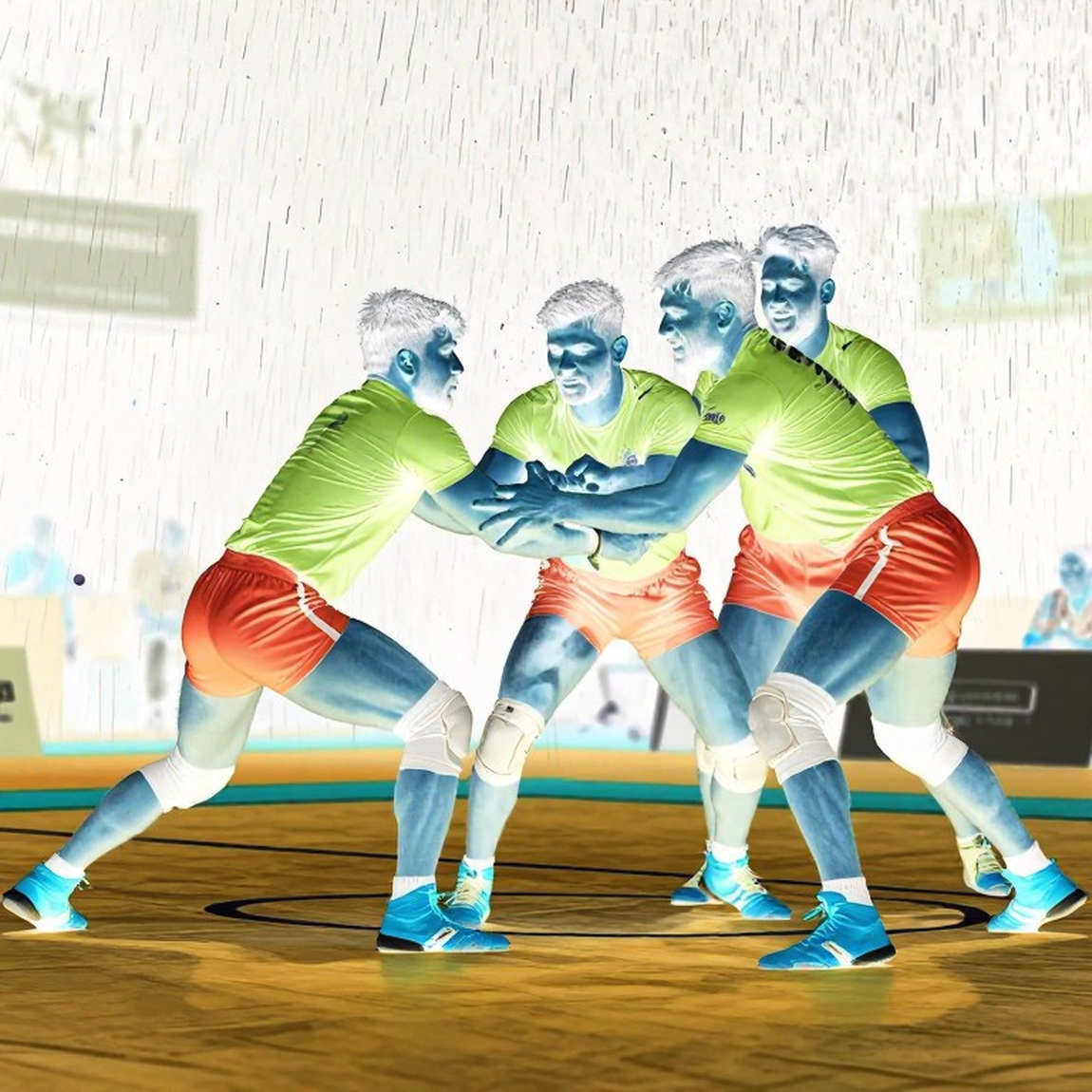
Captaincy in kabaddi is operational rather than ceremonial, provided the rulebook grants the captain the levers. Under standard style there are four, and each one moves points on the mat: naming the raider for a do-or-die raid, calling for a television review, managing timeout usage, and setting the defensive calling pattern from the corner. The release is right to describe the captain as the man who organises the team on the mat under pressure, but it says only half of it. The captaincy carries weight in the specific second when a third consecutive empty raid makes a scoring raid compulsory, and a failed raid sends the raider himself out. That decision does not live in a spreadsheet. It lives with the man standing at the edge of the mat.
Surjeet Singh is a defender, and a defender-captain is structurally coherent here. The corner defender sees the whole mat, counts the do-or-die clock and manages rotations. Pairing him with a raider as vice-captain is the standard discipline-plus-firepower split, not an inventive choice. The way the release presents it tells you the release had no basis for comparison.
Naveen Kumar takes the analysis somewhere more technical, and this is where the release’s claim that individual raids shift momentum stays unfinished. The bonus line yields a point only when the defending side has six or more players on court. A bonus-line raider’s value therefore is not confined to his touch points; his value is that he forces a full-strength defence to spread, and a defence that has spread opens tackle angles on the very next raid. Momentum does not change here through magic. It changes through the space between two lines. Spectators who watch only the scoreboard never see that sequence. Those who watch the lines see that a raider’s job includes preparing the defenders’ job.
All of this rests on one condition the release never supplies: the rulebook. Under standard style, all four levers function. If circle-style elements have been folded in — the circular field, the one-on-one offence-and-defence alternation, the rural Punjab inheritance — then scoring itself changes, and so do the captain’s powers. The question is not academic. The release itself references Pakistan and UK/Canada diaspora sides, federations whose players frequently come out of circle-style kabaddi. Under a hybrid rule set, Surjeet Singh’s captaincy will not mean what it means under standard style.
And the selection minutes? Who picked Surjeet as captain, on what date, against which criteria, with how many members agreeing — none of it exists in the release. After the 18-27 semi-final in Jakarta in 2026, I obtained thirty-eight pages of selection minutes and matched them against load sheets; two defenders had played fourteen matches in twenty-one days. That work gave me a habit: I ask for medical load sheets with every squad announcement. This time there is no squad to attach them to. Where there are no selection minutes, debating the merit of a captain is pointless. The subject of the argument should be the selection process, and that process is currently invisible.
Most coverage will fight the Surjeet-versus-Naveen argument — whether a defender should hold the armband or the raider who piles up points. That debate is standing on the wrong question. The right question is why a release that contains no squad, no coach, no opponents and no rulebook contains a captaincy announcement at all. Because captaincy announcements are cheap and squad lists are expensive. A squad requires a meeting, minutes and signatures. Somebody signed it. Somebody filed it. Nobody read it.
The sharper problem is the back-to-back line. There are only two routes out of it. Either the sentence was lifted from a template built for a different event and the tournament really is the first edition, or a prior edition of the Commonwealth Kabaddi Championship exists, in which case the "inaugural" framing is false and the event’s prestige rises a notch while the "new addition to the calendar" line collapses. One of the two lines has to be retracted, and the retraction will reveal how the release was assembled. In my experience, when this kind of defect surfaces in an announcement, the whole document has usually been built by dropping a new name into an old template.
I am filing the forecast with dates attached so it can be held against me. First: if no sanction letter or rulebook for this championship is visible on the AKFI or IKF website by 31 December 2026, treat the event as promoter-run and downgrade the captaincy story from official to unofficial. Second: if the squad list, the head coach and the selection committee have not all been published before the first match, accept that the announcement machinery has outrun the selection machinery. Third, and this is the on-mat claim: in Naveen Kumar’s first outing I will count the raids in which he crosses the bonus line against a defence of six or more, and if that share falls below one-third of his total raids, the vice-captaincy argument stays on paper only.
One office owns the answer — the AKFI secretary and the IKF technical committee. The question is not whether Surjeet Singh deserves the armband. The question is who owns the event he has been appointed to lead, who holds its rulebook, and on what date its register opens.