
A Fifty in 14 Balls: Prema Rawat's World Record Is Real, But the 'All-Rounder' Tag Still Awaits Proof
**सीधा उत्तर:** उत्तराखंड की प्रेमा रावत ने सीनियर महिला टी20 ट्रॉफी (बीसीसीआई घरेलू प्रतियोगिता) में हैदराबाद के खिलाफ केवल 14 गेंदों में अर्धशतक जड़ा — महिला टी20 क्रिकेट में उपलब्ध आंकड़ों के भीतर सबसे तेज पचासा। इससे पहले संयुक्त रिकॉर्ड 15 गेंदों का था। उन्होंने 4 ओवर में 12 रन देकर 2 विकेट भी लिए; उत्तराखंड ने 187/2 बनाकर हैदराबाद को 98/8 पर रोक दिया और 89 रन से जीता। **मुख्य तथ्य:** - पारी: 14 गेंदों पर नाबाद 50 रन, 6 चौके + 4 छक्के (50 में से 48 रन बाउंड्री से, 96%)। - स्ट्राइक रेट: लगभग 357; चौथे नंबर पर 17 गेंद शेष रहते हुए बल्लेबाजी के लिए आईं (डेथ ओवर फिनिशर की भूमिका)। - गेंदबाजी: 4 ओवर, 12 रन, 2 विकेट (इकॉनमी 3.00)। - टी20ई करियर: 7 विकेट, औसत 18.85, इकॉनमी 5.73; मूल पहचान लेग स्पिनर, आयु 24 वर्ष। - स्थान: महाराष्ट्र क्रिकेट एसोसिएशन स्टेडियम, गहुंजे, पुणे। **जरूरी कैविएट:** यह रिकॉर्ड घरेलू स्तर का है, अंतरराष्ट्रीय नहीं; तुलना केवल उन मैचों पर लागू है जिनका डेटा उपलब्ध है, इसलिए यह 'उपलब्ध आंकड़ों के भीतर विश्व रिकॉर्ड' है। स्रोत में दर्ज तारीख 3 नवंबर 2026 की स्वतंत्र पुष्टि नहीं हुई है। बल्लेबाजी का दावा एक ही पारी पर आधारित है — इसे स्थापित अंतरराष्ट्रीय क्षमता के रूप में न पढ़ें।
Pune: In the Senior Women's T20 Trophy, Uttarakhand's Prema Rawat smashed a half-century off just 14 balls, claiming the fastest fifty in women's T20 cricket. The official BCCI Domestic social media handle confirmed the feat with a 'world record alert'. At the Maharashtra Cricket Association Stadium in Gahunje, Uttarakhand beat Hyderabad by a commanding 89-run margin, with Rawat playing a decisive role with both bat and ball.
How the match unfolded
Batting first, Uttarakhand posted a strong 187 for 2 in 20 overs. Rawat walked in at No. 4 with only 17 balls remaining in the innings. That means her fifty was a pure death-overs performance — not an innings-building effort, but a finisher's demolition. She made an unbeaten 50 off 14 balls, including 6 fours and 4 sixes. In other words, 48 of her 50 runs came purely from boundaries — 96 per cent of her scoring. This figure makes it clear that the innings was built on clean, powerful striking rather than running between the wickets. Fifty runs off 14 balls translates to a strike rate of roughly 357 — an extreme in T20 cricket.
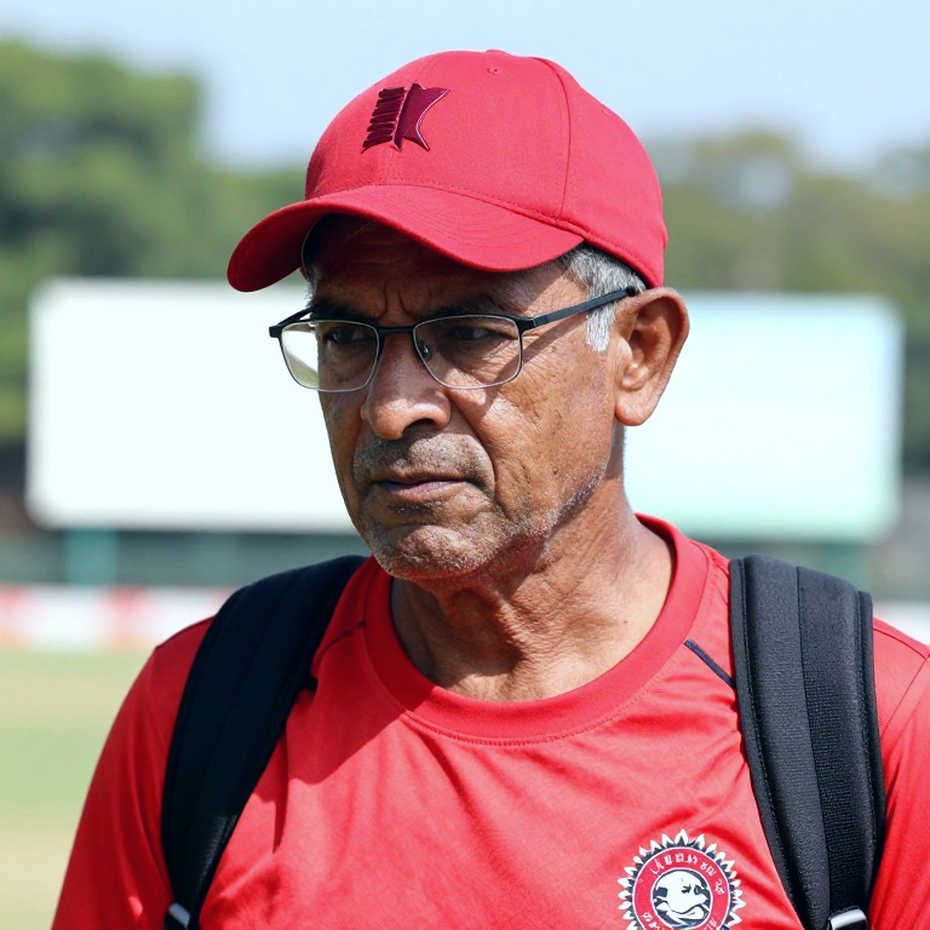
Rawat also contributed with the ball, taking 2 for 12 in 4 overs — an excellent economy of 3.00. Hyderabad could manage only 98 for 8 in their 20 overs. Overall, this was not a match decided by one freak innings but a comprehensive team performance, with Rawat's dual contribution the brightest part of it.
The record's foundation — and its limit
Before this feat, the joint record for the fastest half-century in women's T20 cricket stood at 15 balls, shared by several names — Kelly in the Super Smash, Harris twice in the T20 Blast (July 2026), and Fatima Sana in T20Is (2026). Rawat has now gone past that mark with 14 balls and sits at the top of that list.
But an important qualification must be added here, one the source itself acknowledges: this comparison applies only to matches for which data is available. It is therefore a 'fastest fifty within available data', not an institutionally certified universal world record. The distinction looks small but matters — dropping that caveat and calling it 'the fastest fifty in the world' in future reporting would be a factual overreach. Another essential context point: this comparison places different tiers and different competitions in the same table. Fatima Sana's fifty came in international T20Is, while Rawat's came in the domestic Senior Women's T20 Trophy.
The domestic vs international divide
This is the most important context marker of the whole story and must be applied to every conclusion: Rawat's record was made in a BCCI domestic competition, not in international cricket. The quality of bowling attacks in a domestic T20 trophy is naturally lower than at international level. This does not diminish the statistical significance of the record — the number is real, confirmed by an official channel, and the match result is unambiguous. But the 'competitive difficulty' tier of this feat is domestic, and presenting it as an international achievement would go beyond the facts.
A second caution is equally necessary: one innings of 14 balls is a high-variance event. It proves Rawat has the capability; it does not prove she can do it consistently. The source provides no career batting average, strike rate or innings count. That is why a headline like 'stunning all-round show' tells a story that runs ahead of the data.
Her bowling identity is far more established
Interestingly, Rawat's original identity is that of a leg-spinner — she is fundamentally a wrist spinner, and batting is an extension of her game. At 24, a spinner is typically entering the peak years of a career, since spinners mature later than fast bowlers.
Her international T20I record is still small — 7 wickets in total, an average of 18.85 and an economy of 5.73. Building large conclusions on an average derived from seven wickets is risky, but an economy of 5.73 is considered a strong figure in women's T20I cricket. Most importantly, this figure aligns with her 2 for 12 in this match (4 overs, economy 3.00) — two different contexts producing the same picture: a leg-spinner who specialises in containing runs. This is the most reliable conclusion of the entire analysis, because it is backed by cross-validation.
By contrast, the batting evidence is very thin. It is therefore more accurate to see Rawat, for now, as an emerging bowling all-rounder or lower-order hitter rather than an established all-rounder. In cricket, 'all-rounder' means being a first-choice starter in both departments — and here the batting half rests on a single innings.
What it means for the team and the pipeline
The operative team in this story is Uttarakhand, not India. The only India-related data point is Rawat's career line of 7 T20I wickets. Reading this as a statement about the strength or weakness of the Indian team would therefore be premature. The genuine positive signal comes from the domestic-to-international pipeline: a 24-year-old international spinner producing a record innings at domestic level shows that India's domestic women's structure can incubate power-hitting, not just defensive bowling. But one innings is not enough to claim an impact on selection.
What to watch next
First, whether Rawat consistently scores at a strike rate above 40 across domestic scorecards. Second, whether she is promoted up the order in the India T20I side — a signal that selectors are buying the batting narrative. Third, whether her T20I economy holds around 5.7 across 15-plus wickets. Fourth, if a women's franchise auction takes place in future, whether she is assessed as an 'all-rounder' rather than a 'bowler'.
A question over the date
One technical point deserves mention: the embedded BCCI Domestic post in the source carries the date 3 November 2026. Whether this is a forward-dated or typographical error cannot be independently confirmed from the available material. This report should therefore be read as 'recent but date-unverified' — it would be better to check the publication date before citing it.
Conclusion
In short, Prema Rawat's 14-ball fifty is a genuine, officially flagged record — within the bounds of available data. Her 2 for 12 and T20I economy of 5.73 establish her as a capable, economy-controlling leg-spinner. But the 'stunning all-round show' framing overstates the batting evidence, which currently rests on one domestic innings. The real story is a multi-skill signal emerging from India's domestic women's cricket pipeline, not the coronation of an established all-rounder.