
The New Geography of Asian Cricket: The Tussle Between Power, Market and the Field
एशियाई क्रिकेट का केंद्र आज भारत, पाकिस्तान, श्रीलंका, बांग्लादेश, अफ़ग़ानिस्तान और खाड़ी देशों के पास है। एशियाई क्रिकेट परिषद (ACC) की स्थापना 1983 में हुई और एशिया कप 1984 से खेला जा रहा है, जिसमें भारत सबसे सफल टीम है। मुख्य मुद्दे तीन हैं: भारत-पाकिस्तान के बीच 2012-13 के बाद द्विपक्षीय सीरीज़ का न होना, टूर्नामेंटों की मेज़बानी पर विवाद जिसके कारण संकर (हाइब्रिड) और तटस्थ-स्थल मॉडल अपनाए गए — जैसे 2023 एशिया कप और 2025 चैंपियंस ट्रॉफी में — और टी20 लीगों के बढ़ने से खिलाड़ियों के कार्यभार तथा अनापत्ति प्रमाणपत्र की समस्या। खेल के स्तर पर भारत ने 2024 टी20 विश्व कप और 2025 चैंपियंस ट्रॉफी जीती, अफ़ग़ानिस्तान 2024 टी20 विश्व कप के सेमीफ़ाइनल तक पहुंचा और बांग्लादेश ने 2024 में पाकिस्तान में टेस्ट सीरीज़ जीती। आगे की दिशा दो बातों पर निर्भर है: घरेलू ढांचे और जूनियर पाइपलाइन में निवेश, तथा राजस्व बंटवारे और कैलेंडर पर एशियाई सदस्यों के बीच सहमति।
Introduction: The New Centre of World Cricket
Cricket was born in England, its laws were written there, and for a long time its centre of power was Lord's. But as the first quarter of the twenty-first century closes, that picture has fundamentally changed. Today cricket's economic axis, its largest audience base and its biggest market all sit in Asia. India, Pakistan, Sri Lanka, Bangladesh, Afghanistan and the Gulf states together generate the largest share of the International Cricket Council's revenue, which is why no global cricket decision can realistically be implemented without the consent of Asian members.
But this growing weight carries a contradiction. On the field, Asian teams have rarely been stronger: India won the T20 World Cup and the Champions Trophy, Afghanistan reached a World Cup semi-final, Bangladesh beat Pakistan in a Test series in Pakistan. Off the field, meanwhile, Asian cricket remains consumed by internal politics. The India-Pakistan standoff, the disappearance of bilateral series, disputes over tournament venues and growing competition between T20 leagues together create an environment in which sport and politics can no longer be cleanly separated.
The Asian Cricket Council: Structure and Balance of Power
Asian cricket's formal architecture rests on the Asian Cricket Council, founded in 2026. Its membership began small and now stretches from West Asia to East Asia. Full members include India, Pakistan, Sri Lanka, Bangladesh and Afghanistan, with associate members including the UAE, Nepal, Oman, Hong Kong, Malaysia, Singapore, Thailand, Bahrain, Qatar, Saudi Arabia, Iran, China, Japan, Bhutan, the Maldives, Myanmar and others. That diversity is both the Council's greatest strength and its greatest difficulty.
A strength, because the region is a vast untapped market: Nepal's audience enthusiasm has surged, the UAE has built strong infrastructure for international tournaments, and countries such as Saudi Arabia are now taking cricket investment seriously. A difficulty, because the Council's leadership has always been negotiated between the major members. The BCCI and the PCB both play decisive roles, and when their positions differ, smaller members are often caught in between. For Nepal, Afghanistan and Bangladesh, this is particularly delicate, because their financial dependence and political neutrality must both hold at once. In recent years the ACC presidency has shifted toward Pakistan, reopening debate over internal power balance, and every decision on venues, calendar priorities and revenue sharing now passes through a double layer of scrutiny.
The Asia Cup: Four Decades of a Tournament
The Asia Cup is Asia's oldest continuous multi-nation competition. It began in 2026 in Sharjah, where India won the first edition. Since then the format has changed repeatedly between ODI and T20 and the host has moved around. Sharjah was effectively its early home because political obstacles were fewer and the weather cooperated; Sri Lanka and Bangladesh later hosted as well.
India is the most successful side by titles, Sri Lanka second, Pakistan also among winners, though Pakistan's record has rarely matched its potential. The Asia Cup's significance is not only in results. It is the one regular stage on which India and Pakistan meet, and therefore the only recurring occasion on which the two sides face each other without a bilateral series. That is why every edition's schedule and venue is negotiated for months. The 2026 edition made this plain: Pakistan was named official host, India refused to travel, and a hybrid model was adopted with India's matches in Sri Lanka and the final in Colombo, where India beat Sri Lanka with Mohammed Siraj taking six wickets. In 2026 the T20 edition was staged in the UAE and India again took the title, reinforcing the likelihood that neutral venues will continue to dominate.
India and Pakistan: The Game Off the Field
Asia's most complex story is the India-Pakistan relationship. The two last played a bilateral series in 2026-13, when Pakistan toured India; since then they have met only in multi-nation events. The consequence is that the world's largest cricket audience sees this fixture once or twice a year, which inflates its commercial value enormously.
The 2026 Champions Trophy is the clearest recent example. Pakistan was named host, India refused to travel, and all of India's matches were played in Dubai with the tournament structure rebuilt accordingly. India went on to win, but the more significant fact is that this was the first time a major global tournament's schedule was reorganised this way, sending a clear signal that the Indian board's veto capacity is now established at both the practical and systemic level. Pakistan's position has also hardened, insisting on its hosting rights. The cost falls chiefly on the players of both countries, who lose an important share of international experience.
India: A New Phase of Dominance
India is in one of the most successful phases of its history. After the 2026 ODI World Cup final defeat to Australia, the side rebuilt, winning the 2026 T20 World Cup final against South Africa in Barbados and the 2026 Champions Trophy final against New Zealand in Dubai. Both titles shared one quality: the team handled pressure on the biggest occasions, long its weakest trait. The composition has shifted, with Rohit Sharma and Virat Kohli retired from T20 internationals and Shubman Gill, Yashasvi Jaiswal, Tilak Varma and Rishabh Pant taking on responsibility, while Jasprit Bumrah leads a bowling group effective across formats.
The real challenge lies in the system rather than on the field: league expansion, player workload, the franchise-versus-country priority debate and domestic quality. Persistent Test defeats on seaming tracks have also opened a technical debate about whether limited-overs success has come at a cost to the longer format.
Pakistan: Talent Between Instability
Pakistan lives a strange paradox. Babar Azam, Shaheen Afridi, Mohammad Rizwan and Naseem Shah are world class, and the fast-bowling tradition remains the core strength. Yet collective performance keeps oscillating: group-stage exits at the 2026 ODI World Cup and 2026 T20 World Cup, and a group-stage exit at the 2026 Champions Trophy as hosts.
The root cause is instability: in selection, in leadership, in stakeholder stance. Frequent changes of captains and coaches deny the team a long-term plan, while the gap between domestic structure and international calendar persists. The PSL has given players a platform but is T20-centric and offers limited red-ball benefit. The central question is whether Pakistan's system can return to a normal bilateral environment, without which the losses remain both financial and sporting.
Sri Lanka: Balance Within Limits
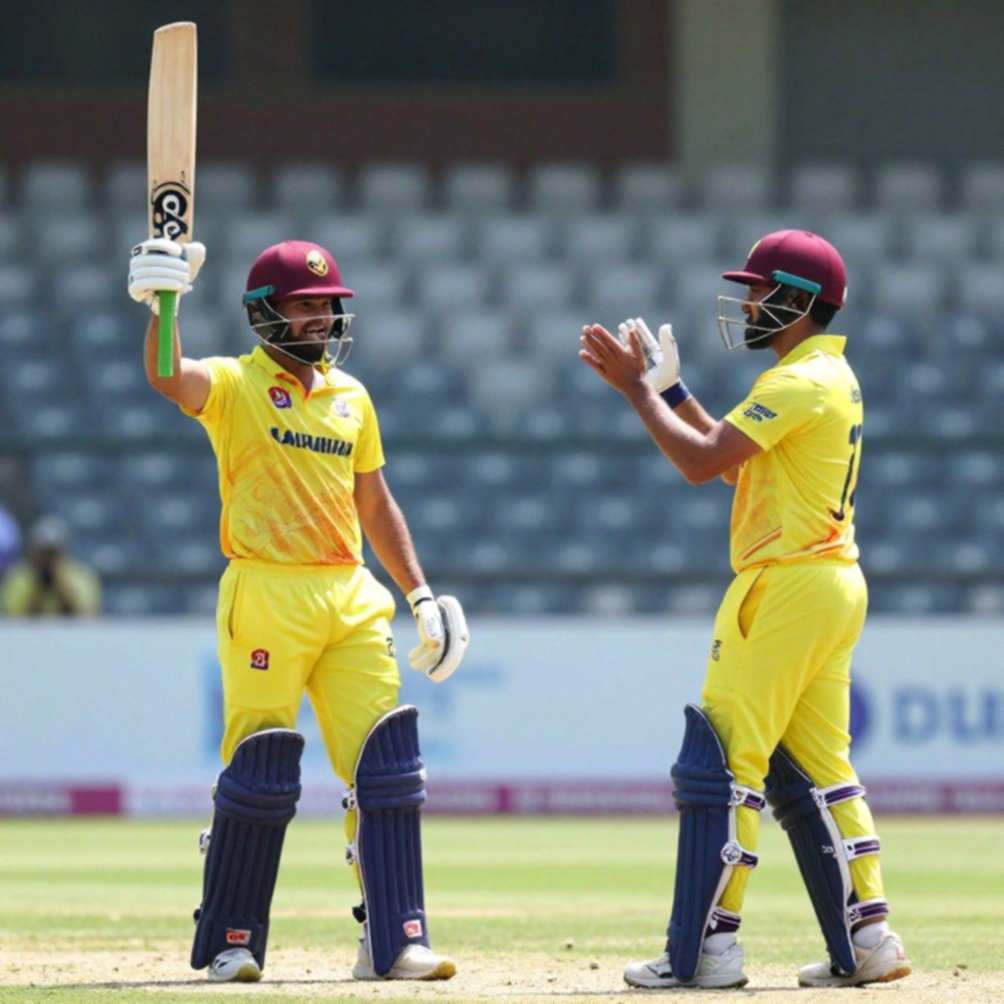
The 2026 World Cup win proved strategic innovation can overcome limited resources. After that generation retired, the team cycled through rise and fall, but the 2026 Asia Cup title showed it remains a major side when given the chance. Financially the board has always struggled, and the country's economic turbulence hit revenue directly, limiting the investment needed to stay competitive. Spin bowling and middle-order flexibility have kept the team in contests, and in recent years a younger, more aggressive group has emerged, though financial stability remains the binding constraint.
Bangladesh: The Achievement-Expectation Gap
Bangladesh's international journey spans more than three decades, and its greatest strength and weakness are the same thing: an intensely competitive domestic environment paired with a lack of composure under pressure at the highest level. The Test series win in Pakistan in 2026 was its most notable achievement and evidence that investment in pace bowling is paying off, but inconsistency returned in the months that followed. Reducing dependence on senior players such as Shakib Al Hasan is a difficult transition, and administrative continuity will determine whether the board can become a model for resource-constrained nations.
Afghanistan: The Fastest-Rising Force
Afghanistan's is the story that stands apart. From associate status to Full Membership in under fifteen years, the team is now nobody's easy opponent. The clearest proof came at the 2026 T20 World Cup, where Afghanistan reached the semi-final. Rashid Khan, Mujeeb Ur Rahman, Naveen-ul-Haq, Rahmanullah Gurbaz and Ibrahim Zadran showed depth across departments, and Rashid's contribution as player and captain is genuinely exceptional in the game's history.
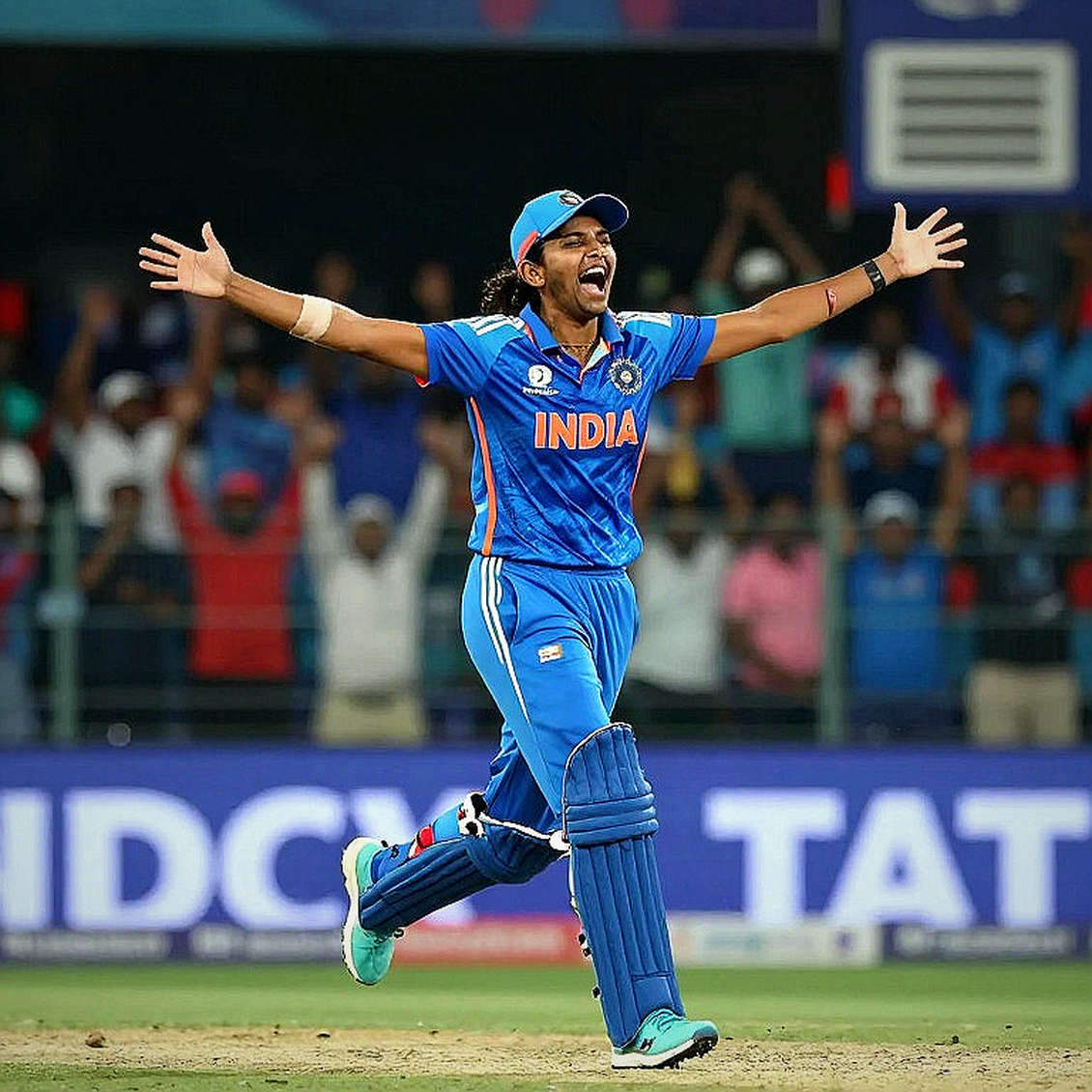
The model has relied heavily on cricketers raised in refugee camps who built careers through leagues, making it inspiring for countries without developed structures. Its weak point is that Afghanistan rarely hosts international cricket and usually plays at neutral venues, a permanent economic and logistical constraint.
Nepal, the Gulf and the Expansion of the Game
An under-discussed but important chapter is that of the associate members. In Nepal cricket is already close to football in popularity, and recent national team performances have generated a new wave of domestic enthusiasm. The UAE has invested heavily in becoming a global hub, with multiple international-standard stadiums and proven hosting capacity, though its national team base remains largely tied to South Asian diaspora and long-term stability requires locally developed players. Oman, Hong Kong, Malaysia and Singapore have done solid work within their limits. The overall effect is that both the standard of tournaments such as the Asia Cup and the performance of ninth- and tenth-ranked teams have improved — a better measure of Asian cricket's real depth than title counts alone.
The Economics of T20 Leagues
Asian cricket's economic structure now rests mainly on T20 leagues. The IPL has become the most valuable property in world cricket, a status built not only on team performance but on media rights values that rank among the largest deals in sports broadcasting. It has given Indian domestic cricket a strong financial base and players a platform to experience international-standard conditions. The PSL, LPL and BPL have carved out their own space at a smaller scale, while Gulf-based leagues have used financial incentives to attract overseas players. The shared consequence is that players now have multiple options, which puts national boards' control under strain.
The most sensitive issue is the no-objection certificate and the congested calendar. As leagues multiply and collide with international windows, boards must balance player availability against national priorities. One result is that senior players increasingly choose formats, complicating team management.
Women's Cricket: A Rapidly Changing Picture
Women's cricket in Asia has advanced more in the past decade than in any comparable period. The Women's Premier League, launched in 2026, gave players a platform and financial security long missing, and early seasons proved the market existed and merely lacked a stage. India's women's team has shown clear improvement in performance and confidence, and hosting major tournaments at home lifted domestic enthusiasm. Bangladesh, Sri Lanka and Pakistan have also improved regionally. But a new problem has emerged: calendar density, with boards balancing league availability against international commitments, while junior structures in many Asian countries remain thin.
Infrastructure and the Junior Pipeline
Long-term strength is decided at the base, and Asia's picture is mixed. India's academy and domestic expansion has been rapid, with the Ranji Trophy giving players a long stage, though the weakening of fast-pitch traditions is debated. Pakistan's domestic structure has been reorganised repeatedly without any version getting time to settle. Sri Lanka's school and club tradition is strong but funding has not matched need. Bangladesh's academy and district competitions have produced limited but real results. Afghanistan's pipeline rests on refugee camps, league exposure and overseas camps. Nepal and Oman are limited in resources but show results from clear planning and continuity. The lesson is that Asia's future depends on which countries build domestic structures as living systems rather than selection tools.
Asia's Weight in the Global Council
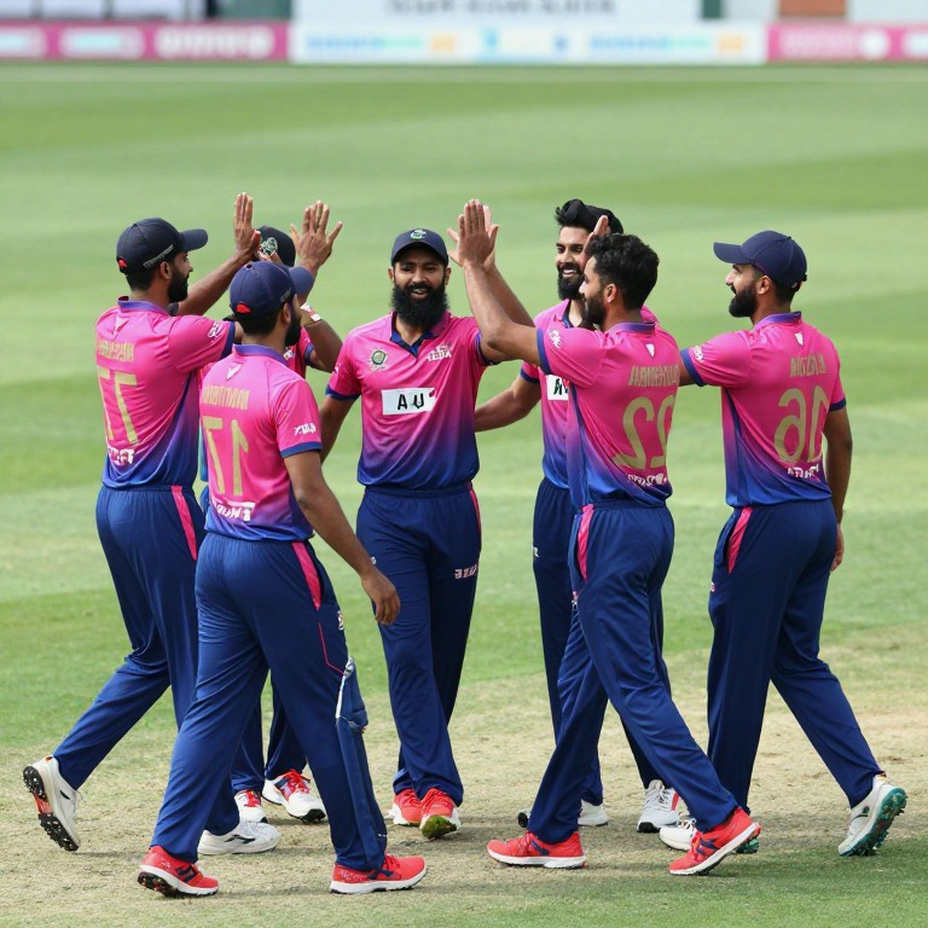
The arrival of an Indian administrator at the head of the ICC in late 2026 confirmed that Asia's influence is now decisive globally, not merely regionally — the product of the Indian board's financial power, its share of broadcast rights and its diplomatic reach among members. Revenue distribution is now contested: Asian boards argue that revenue they generate should return to them, while associates argue the system should promote development rather than serve the largest markets. That tension will persist within Asia too, since both India and Pakistan court associate support. A further factor is cricket's entry into the Olympic movement; a sustained Olympic presence would raise the importance of T20 internationals and force boards to reserve permanent calendar space.
The Calendar and the Next Decade
The coming three to four years are already densely scheduled, which is the biggest strategic challenge. The next T20 World Cup in India and Sri Lanka, the next ODI World Cup in southern Africa and the growing weight of the World Test Championship will together determine which formats Asian teams prioritise. Neutral venues are increasingly dominant, driven not only by politics but by commercial viability — ticketing, broadcast timing and security are all simpler. The cost is that the game's local roots weaken: when a team does not play before its own crowd, the spectacle diminishes and a new generation's connection stays limited.
Conclusion
Asian cricket is in its most powerful and most contradictory phase. The game's economic centre has fully relocated here and its administrative decisions echo globally, yet the same region struggles with power politics, venue disputes and an overloaded calendar. The India-Pakistan relationship is the clearest illustration: when the two teams that draw the largest audience in the sport have not played at each other's home for decades, it is clear that sport and diplomacy cannot be fully separated. On the field India's dominance looks unbroken, but its real test comes when the post-Rohit and post-Kohli era is fully established. The rise of Afghanistan, Nepal and the Gulf states signals that Asian cricket will not remain a game of three or four nations — which is the best news the sport has. The next big test is whether Asian cricket can convert its commercial success into quality of play and development for all members, or remains a closed system for a few large markets. That answer will be settled within a decade, and its impact will be felt well beyond Asia.